
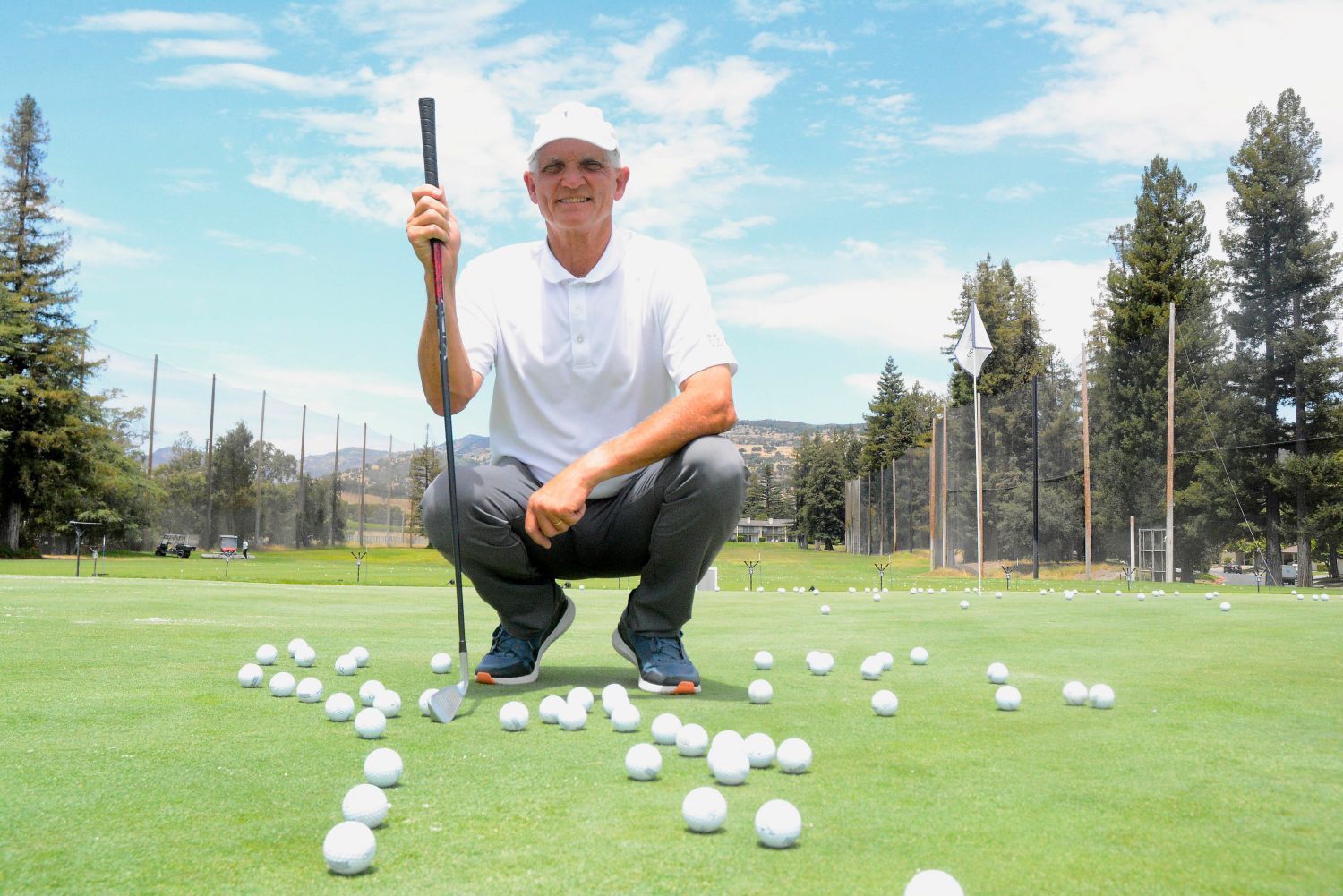
This article originally appeared in the August issue of NCGA Golf Magazine
Students at Bird Golf Academy at Silverado Resort learn how to avoid flipping their wrists and much more.
By Judd Spicer
With over 20 prime locations spread across 14 states, the budding Bird Golf Academy doesn't lay any eggs when it comes to instruction. And that includes here in Northern California at Silverado Resort in Napa.
While the game's rising round counts have extended to all manner of influencer teaching, mobile advice and technology tips, Bird's approach has trended both acutely interpersonal and expertly credentialed. And, in lieu of rigid itineraries or a uniform syllabus, Bird's nest of teachers fly with respectively bespoke purviews, allowing students to pick and choose areas of focus.
Collectively sporting over 250 years of teaching experience across its instructional staff, Bird has combined choice property partnerships with a curated, "small group only" philosophy which sees its 3-, 4- and 5-Day schools featuring either 1:1 or 2:1 student-to-teacher ratios.
"Teachers with great pedigree; teachers with great history, all of whom have played the game at very proficient levels," says Bird Golf instructor Jim DeLaby. "And with Bird's locations, students can basically go anywhere they want, whenever they want."
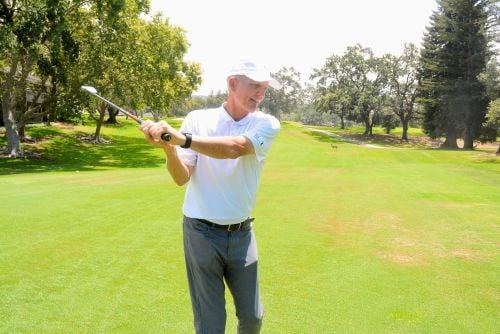
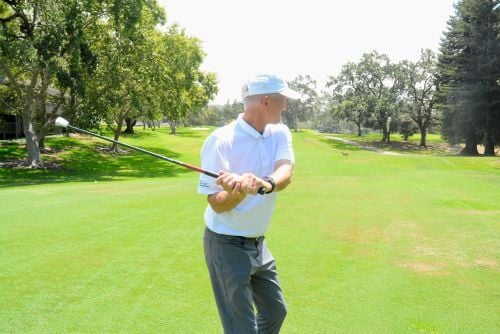
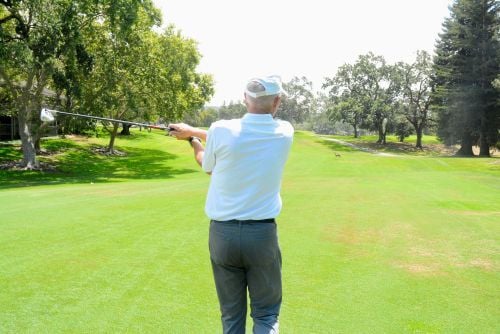
With a pair of championship, tour-quality courses and a full flex of practice facilities upon which to train, Silverado Resort has tracked as a Bird centerpiece.
"The facilities, the practices areas, the courses – all first-class here," DeLaby enthuses of Silverado. "We use both courses, but I prefer training on the South Course; just a bit more user-friendly, especially for students who are beginners or higher handicappers. And, of course, the better players want to go train on the North."
While Bird and DeLaby work with a philosophy of guest flexibility, a typical day of teaching involves:
"Three hours of instruction in the morning, followed by lunch, and then three hours on the course; some people want me to play with them, but I'd rather caddie for students," DeLaby details. "That's the daily framework; but we can always switch that around, based on what the customer wants. We go with the flow here."
Working with all ages and skill levels, Bird's Silverado training turf offers all manner of malleability.
"We have both mats and grass on the public side of the sizeable range, which is all available to us, if we want to use it," DeLaby says. "Next to that is a really cool chip/pitch/lob/bunker area; all in super condition. For our instruction, we can also go to the back of the two-sided range for full swing, along with a dedicated chipping and putting practice green. And then, next to the pro shop is a giant green, and it has every putt; just a great place to practice and develop."
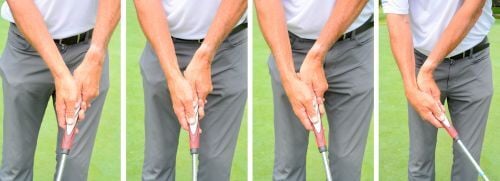
Tune Up Before Tee-Up
For all students, DeLaby likes to ensure a proper pre-prep stretch and swing tune-up session.
"I have a lot of Baby Boomer clients, but I do this with every single customer," DeLaby explains. "Because most players don’t warm-up properly, I do this empirical data thing where I like students to have the club shaft on their chest, and then turn to both sides while I put a club down to show them how far they went. This drill is a gamechanger for health."
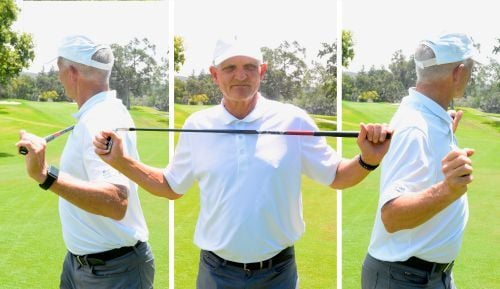
With stretches based on his own work with physical therapist, DeLaby then moves to a "diamond" of a drill.
"And then, we'll do baseball swings," says DeLaby, "seven of 'em, clipping a tee, lifting heels both ways just to get lubrication in the spinal fluid, and that drill usually results in-between two inches and a foot of increasing range of motion."
Forget Flipping
"Many, many people, golfers of all levels, come to us with wristy putting strokes, along with wristy chipping and pitching," says DeLaby. "I'd say nearly every 15-handicapper and above we work with is flipping wrists, casting wrists; and those golfers are doing it all the way up to full swing."
To correct, DeLaby gets, well, hairy.
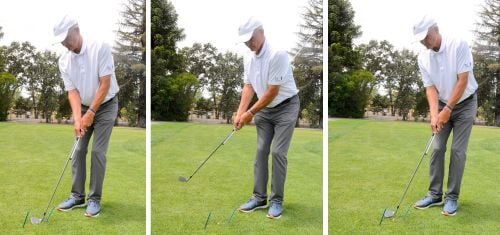
"From 20 feet out, I'll have players hit four putts their way, through a path gateway (of pencils), and then take a picture of dispersion pattern," details the instructor. "And then, I'll take a wristband, looks like a hairband, and I'll put it on their lead wrist and then attach it to the butt of the club; and if they're really flippy, I'll use two bands. So, what happens is a 40-70% improvement in dispersion pattern – every time – in both width and length."
Extend the Connection
The hairband technique then graduates from flatstick to small swings.
"The brain now, through proprioception, can feel and sense what's going on with that (hairband) connection," says DeLaby. "So, we'll use this to move on to chipping and then pitching"
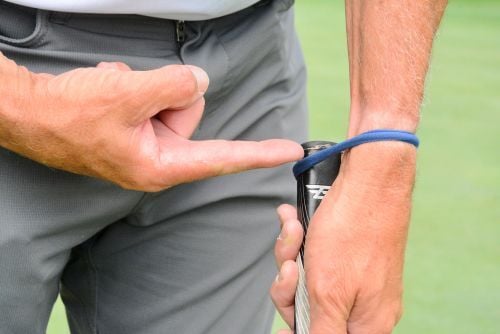
With the intent of improving swing precision, DeLaby extends the connection past merely wrists.
"The lower case 'y' is the goal at impact, right? So, for our putting, chipping and pitching with no wrists, I like to use our aiming sticks," DeLaby explains. "I'll attach the stick to a player's club with those hairbands, and extend the stick into the lead armpit; half of the stick is down the shaft, and half is above it."
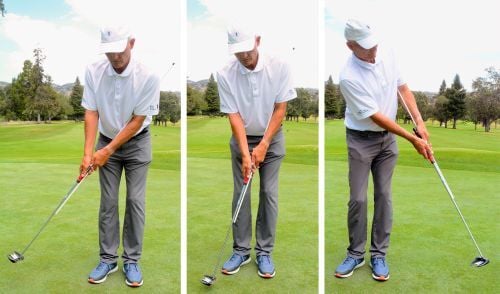
Along with using the same gateway path tool, DeLaby brings in the lessons of proper pressure.
"At the same time, we'll work on grip pressure, and I'll say, 'We want bird pressure,' like, don't let go of the baby bird, but don't crush it either," concludes DeLaby. "And with the stick in the armpit, I'd say that 'bird pressure,' on a scale of 1-10, is about a three or four; but, armpit pressure is closer to five. Students can really start to feel the body pulling through, and then when we hit balls with mini swings, players really start to see the accuracy."
BIO: Teaching golf since 1986, instructor Jim DeLaby counts a 30-year PGA of America membership among his menu of coaching certifications. From 1990-96, he served as the Head Golf and Teaching Professional at La Purisima GC, before subsequently running the Cypress Ridge and Monarch Dunes Golf Academies, respectively. In both 1996 and 2003, he was recognized as "Teacher of the Year" by the Northern Chapter of the SCPGA.