
This article originally appeared in the August issue of NCGA Golf Magazine
By James Raia
Bobby Clampett traveled the world as a professional golfer for 30 years. He competed in more than 500 tournaments on multiple tours from Canada to Mexico and Italy to Japan. He played in majors and fledgling events in small towns.
For nearly as long, Clampett, an NCGA Hall of Famer, worked as a broadcaster for several networks, providing commentary on golf's best playing on the most revered courses.
It's not an unusual transition for retired golfers to work on television or write books. But Clampett's current golf career is unique.
The former PGA Tour, PGA Tour Champions and Korn Ferry Tour player and his wife Marianna operate Clampett Ranch in Carmel Valley.
While maintaining a residence and the headquarters of the golf instruction business he founded in Naples, Fla., in 2008, the Clampetts primarily reside on a 10-acre parcel they purchased in March 2024. The move allowed Clampett to provide further assistance to his 95-year-old mother who lives in Carmel.
The ranch encompasses two businesses, Clampett's unique training facility and his wife's equestrian compound and breeding farm.
Since 2007, when the Monterey native co-authored "The Impact Zone: Mastering Golf's Moment of Truth," Clampett has focused on teaching. He believes many players learn the game incorrectly and espouses the Impact Zone teaching philosophy. Clampett's 10th book on the method, "Mastering the Impact Zone: Guide to the Master Class and More," was published in June.
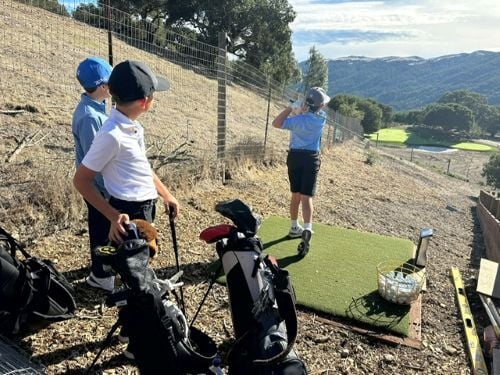
The teaching method focuses on the moment of impact between the club and the ball and includes five key ideas, from a flat lead wrist at impact to maintaining a lag into the backswing.
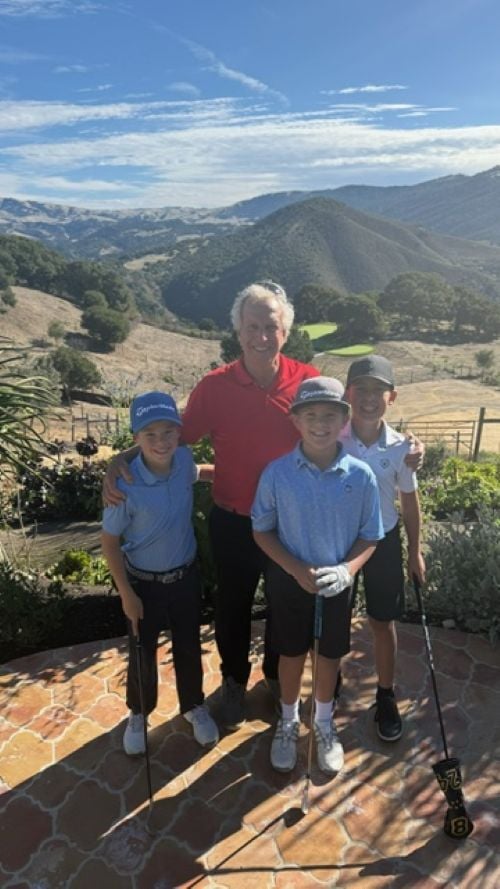
"It's about getting better," Clampett, 66, said during a recent visit to his view-dominated home and business. "I have a student coming tomorrow. He's 80 years old. He just likes golf.
"He knows I offer a level of golf instruction I don't think anyone else does. I think my students know I'm not going to redo their golf swing, like so many style teachers do. I am going to use a technique that determines why their impact isn't optimal."
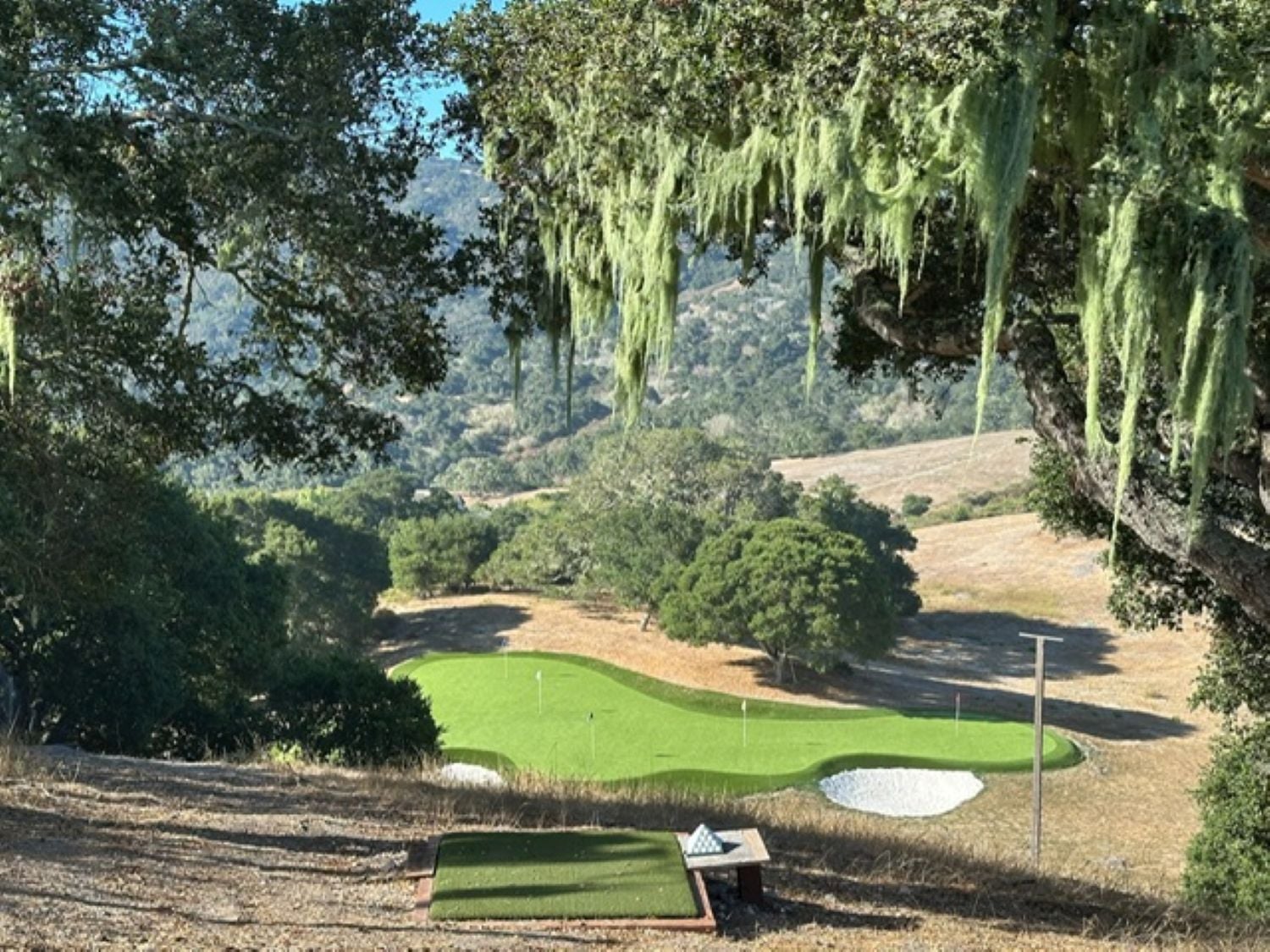
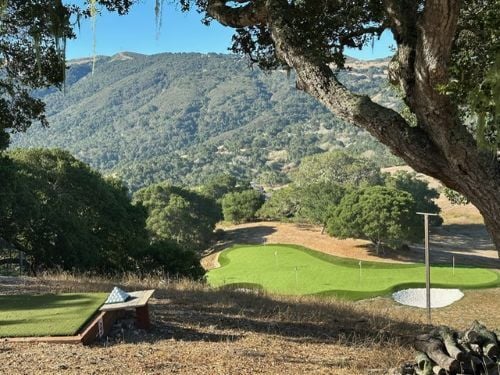
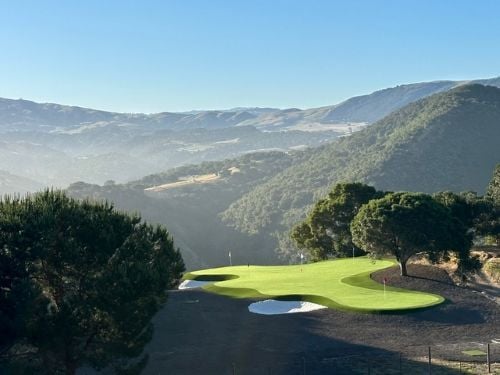
Clampett's training center includes a driving range, putting green, three bunkers, nine par-3 tees and 54 total par-3 holes. It also includes a simulator built in a former hay barn, where Clampett instructs students both in person and online.
The ranch, with holes cut through trees and various foliage, includes views deep into the valley described in John Steinbeck’s 1932 novel “Pastures of Heaven.”
The three 18-hole courses are all rated by the NCGA and play to 53.9 (short course tees), 57.2 (Clampett Ranch tees) and 60.4 (PGA Tour tees).
"It turns out because we didn't move more than the square footage of dirt that needed to be moved, it was fine," said Clampett. "You can build an artificial putting green in your backyard without a permit. So we were able to do that."
Through various golf governing bodies, Clampett discovered the longest layout is the most difficult par-3 course in the world, measuring 3,320 yards. The shortest hole is 162 yards, the longest 211 yards.
"If a student comes in, the only way to play it is with me as part of a lesson," Clampett said. "It's not a golf course; it's a practice facility. But it's also an actual golf course."
Clampett attended Robert Louis Stevenson School (Stevenson School) and was a three-time All-American at Brigham Young University and two-time winner of the California Amateur Championship (1978, 1980). He played on the PGA Tour for 16 years, with one victory, the 1982 Southern Open. Clampett also had six second-place finishes and tied for third in the 1982 U.S. Open at Pebble Beach Golf Links.
Clampett also competed on the PGA Tour Champions circuit for five seasons beginning in 2010 and briefly on the Korn Ferry Tour. His last event was the 2022 PURE Insurance Championship at Pebble Beach.
"Golf isn't very well taught," said Clampett. "PGA professionals in golf shops have to wear a lot of hats. They are talented individuals, but the reality is golf instruction is only one of the hats they have to wear.
"It's kind of like in the old days, you had one doctor. Now you have specialists. Golf instruction is really a specialty. I consider myself an industry leader in the advancement of golf instruction."
A member of Quail Lodge & Golf Club, The Preserve Golf Club and The Club at Pasadera, Clampett usually plays 18 holes a week.
"I am not going to compete anymore; I don't play to that level," he said. "But I do love to play. I'll go out and play with the members, or I'll have a client in town who wants to go out and play."
Clampett also retired from golf broadcasting several years ago. He began as an on-course reporter for CBS at the 1991 PGA Championship and then became a tower announcer for the network for 11 years. He worked 29 Masters tournaments.
He also worked for the network's online broadcasts and was the lead analyst for Turner Sports for more than a decade beginning in 1996.
Clampett learned the craft from Frank Chirkinian, the producer known as the "Father of Televised Golf" who died in 2011.
"He was very adamant about teaching us, 'Don't state the obvious,' " Clampett said. "It was 'Tell me something I don't know.' "
Clampett still watches golf telecasts, but from its multitasking perspective — as a broadcaster, player and teacher. The latter remains the focus of the business he views as integral to golf's future.
"The industry needs help with golf instruction," he said. "But sadly, the way golf management companies are today . . . golf instruction is only measured as the last item on the budget sheet.
"It's directly related to how many dollars are made for the club. How much of it is directly related to ineffective lessons. They don't look at the intrinsic value. My goal is to open people's eyes to another way of doing things."