This article originally appeared in the July issue of NCGA Golf Magazine
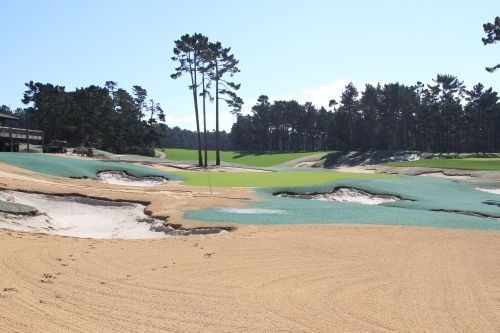
NCGA member course Poppy Hills has had some different looks since opening in 1986.
Most notable was the broad renovation of the course in 2014 by original course architect Robert Trent Jones, Jr.
Among the big changes with that master renovation were:
- Sand Capping
- Rough Eliminated
- New Bentgrass Greens
- Wider Fairways and Softer Doglegs
- Sandy Waste Areas
Each fairway and tee box area had a 6-inch layer of sand installed underneath, changing the soil profile and improving drainage capabilities. At the same time, the sand-capping allowed the course to play firm and fat year-round.
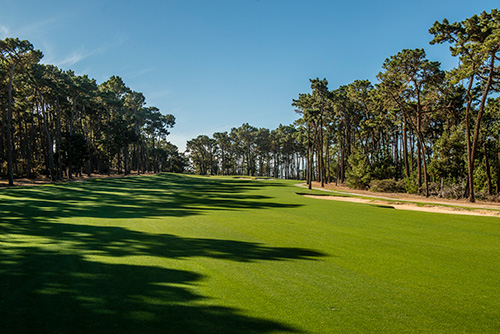
By getting rid of the rough, RTJ, Jr. and Co. expanded the fairway corridors. That created more-welcoming fairways, and also introduced new short-game challenges the previous design lacked.
The greens became smoother both in texture and undulation. Every green at Poppy Hills was completely redesigned, and then upgraded with bentgrass surfaces. As part of the change, nearly every green was afforded an entryway where the ball can be played on the ground, or a side slope that can be used to feed onto the putting surface.
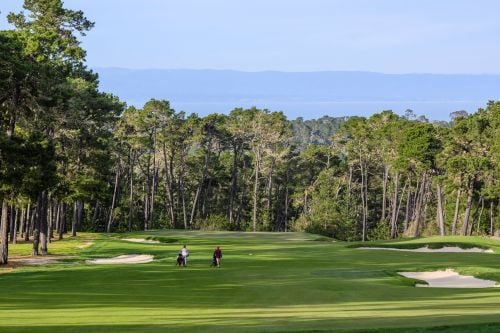
Fairway space was increased by an impressive 150%, as 50 of the 62 playable acres at Poppy Hills became turf. Along the way, several dogleg holes were either reduced or even just straightened—most dramatically the 12th hole. There, the hole was converted from a sharp dogleg right par-5 to a straightaway par-4 with a panorama of the Pacific and Santa Cruz in the background.
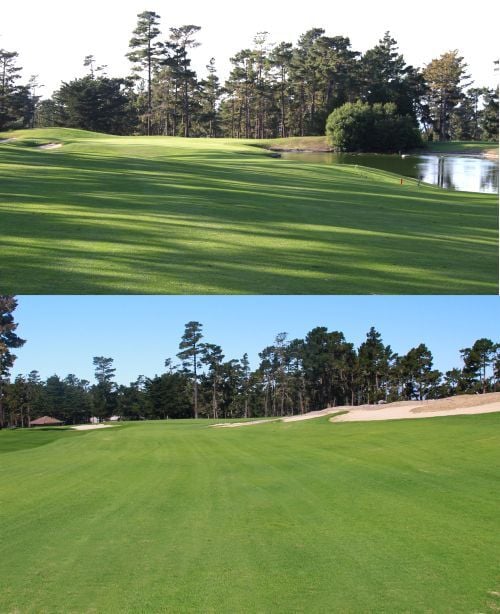
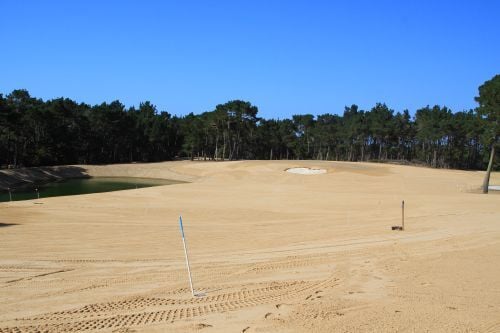
The primary goal of the renovation was water conservation. As a result, the amount of irrigated turf fell from 82 acres to 62 acres. As part of the change, the course became more of a part of the forest. One of the big changes here came on the par-4 5th, where a lake that existed was transformed into sandy waste area, which helped conserve water.
Poppy Hills Course Refinements Project (2021-2022)
The most recent Golf Course Refinements Project conducted at Poppy Hills came in 2021 and 2022, again with guidance from the RTJ, Jr. team.
Fairway Bunkers
Par-4 12th: The left fairway bunker on hole No. 12 was adjusted and reshaped to provide a wider fairway landing area. The first right-hand fairway bunker on No.12 was also reduced nominally to improve the fairway landing area as well. These subtle changes provided a superior landing area, and also increased the strategy and shot values presented for tee shots.
Greens
No. 1 Green
The back right corner of No.1 green was expanded slightly. Additionally, an intermediate cut of grass was incorporated to the right and rear of the green adjacent to the penalty area. These changes allow better playability for golf balls releasing off or through the putting surface.
No. 2 Green
The No. 2 green was completely recontoured in 2021 to eliminate the large ridge in the center of the green, and soften various internal slopes to create more interesting pin locations and provide a variety of improved playing characteristics for both daily and championship tournament play.
No. 7 Green
The No. 7 green was fully reconstructed in 2021 to provide for more subtle contours and eradicate the major transition to the back portion of the green that often repelled approach shots into the slope. The bunkers guarding the green were re-shaped to support proper recovery play, and the green now has expanded playable areas in all green sections, vastly improving the hole’s overall character.
No. 11 Green
The rear portion of No. 11 green was raised slightly to support approach shots to the back section of the green, and also smooth out the contours for improved playability.
No. 13 Green
While the design characteristics of No. 13 green remain substantially intact, the back right corner was reshaped and expanded to provide additional pinnable hole locations and support. The large slope in the middle right portion of the green was reduced to allow the expanded back right corner to blend with the rest of the green.
No. 14 Green
To increase the playability and number of hole locations available, the back right corner of 14 green was expanded. This change improves the shot value for the approach by providing more opportunity for aggressive play over the bunker to back right pins. In addition, the back-right bunker was reshaped.
No. 17 Green
A moderate change was made to the back right portion of 17 green. Although the majority of the green still slopes away from the par-3 tee shot, the back portion was built up to allow golf balls to stay in play. The subtle slope adjustments improves playability for the everyday player while still maintaining challenge for elite players.
New Tees (2021-2022)
No.4 Tee: A new championship tee was added behind #3 green to make the hole a true three-shot par 5 for elite players.
No.5 Tee: A new Jones tee was developed to provide flexibility and length to challenge elite players.
No.6 Tee: The championship tee extended some 15 yards to allow play up to 200 yards.
No.8 Tee: A new Jones tee area was developed to allow play up to 440 yards.
No.10 Tee: The Jones tee was enlarged and resodded to provide options during the multiple NCGA Championships hosted at Poppy Hills each year.
No.12 Tee: A new Jones tee area deck was developed to allow play up to 450 yards.
No.14 Tee: The championship tee extended and resodded to provide additional tee surface.
No.15 Tee: The Jones tee was expanded and reconfigured to add yardage and playing angle options for the par 3.
No.16 Tee: The Jones tee was extended to allow play up to 460 yards.
No.17 Tee: A new, small Jones tee deck was created to offer an additional teeing option for elite players and high-level championship events.