
This article first appeared in the September issue of NCGA GOLF Magazine
SWING THE CLUB HEAD
By Dede Moriarty, PGA with Al Barkow
In the mid-1940s a British golf professional by the name of Ernest Jones gave a speech before an audience of American PGA professionals at the association’s annual convention. In it, he outlined his theory of how to swing a golf club to the best advantage.
Legend has it that at the conclusion of his talk, one member of the audience told a fellow pro that if this guy gets popular, we’re out of business. In a word, Jones’ notion scooted around conventional golf instruction, with its plethora of concepts on the organization of the swing – its path or swing plane, how and at what point the hands should break in the backswing and downswing, when and how much the body turns, the feet move, the weight shifts, where the elbows should be at the start of the downswing, etc. etc. Jones’ notion was simply swing the clubhead, get it in motion and instinctively all that other stuff will simply happen as it should.
No thinking, and especially no pre-thinking about it.
Golf made easy, or at least much less complicated, and personal. Your swing is who you are.
Jones’ concept arose after he lost a leg while serving in the British army during World War I. A good player before the amputation, he was totally committed to the game and was determined to find a way to swing the club and make good contact despite the loss of one anchor, so to say. When fitted with a prosthetic leg, he kept to his notion. It was “discovered” by NCGA Hall of Famer Marion Hollins, who to this day was perhaps the most creative and influential woman golf has ever had.
Hollins, raised on Long Island, in New York, was an outstanding golfer. She won prestigious regional amateur events and a U.S. Women’s Amateur Championship in 1921. She had also developed a keen interest in golf architecture, and when the Curtis Cup was played in England/Scotland she used the opportunity to study the design of many “classic” links and courses. During these excursions she ran into Ernest Jones and was taken by his central idea. With that, she hired Jones to be the club professional at the Women’s National Golf & Tennis Club that she founded. It was then and remains the only golf club ever formed for only women members. Hollins was a feminist from the get-go.
Those who belittled Jones’ teaching would say it was only for women, but that was in large part because of the membership of the club where he presided. During the winter months he taught in a studio in midtown Manhattan, and to men as well as women. He eventually moved west when Hollins did. She had connected with Alister MacKenzie, a prominent golf course designer, and played no little role in the creation of Augusta National and Cypress Point golf clubs, and especially the Pasatiempo Golf Club, which she helped found as well as contribute to the course’s design. She brought Jones in as Pasa’s first head professional.
Up the road a bit, two professionals who taught Swing the Clubhead in the Bay Area were Tom Good and Woody Wright; Good at Lincoln Park and Harding Park, Wright at Lake Merced GC, for some decades. It was at Lake Merced where Dede Moriarty was introduced to Swing the Clubhead, and she has been teaching it for many years, currently at Presidio GC.
So, with an approach geared to a golfer’s natural gifts of feel and instinct, what does Dede offer a student?
“Almost all my instruction has to do with the pre-swing, and most of that is boilerplate. Good posture at address, play the ball off the inside of the lead foot for a driver, a little farther back for the middle irons, a little more back for short irons. And of course, setting up to aim at the target.
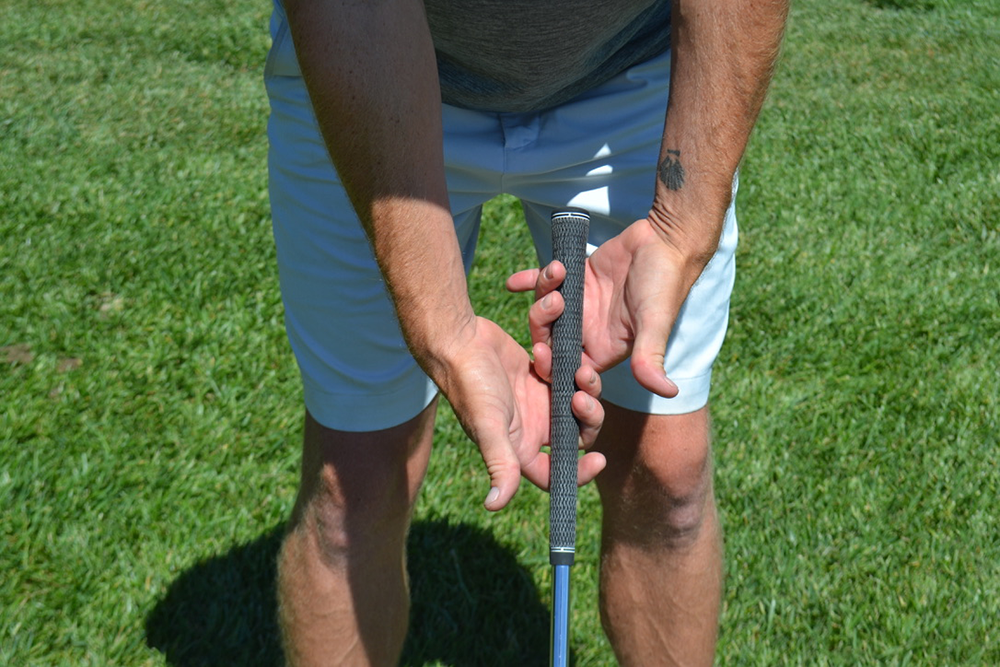
After that, there is a lot to do with the grip that best serves Swing the Clubhead. Important to the concept, or method, is a feeling of ease and flexibility that comes through the hands.
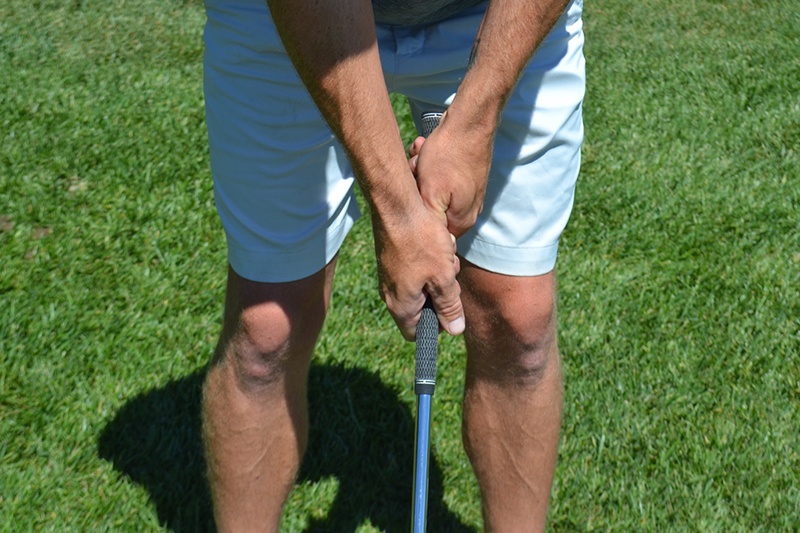
Thus, it is important they are readily flexible so there is a free-flowing wrist break at the top of the backswing, and a good release of the clubhead at impact with the ball. That is well achieved with a relatively light hold on the club. Because your hands will instinctively tighten at the start of the swing, if your grip is too tight at address good flexibility is hard to come by, and the pace and length of the backswing can be restricted. One of the best ways to know this is if you hit the ball far right of your target. It is almost certainly because you have not released your hands, and the clubhead, at impact.
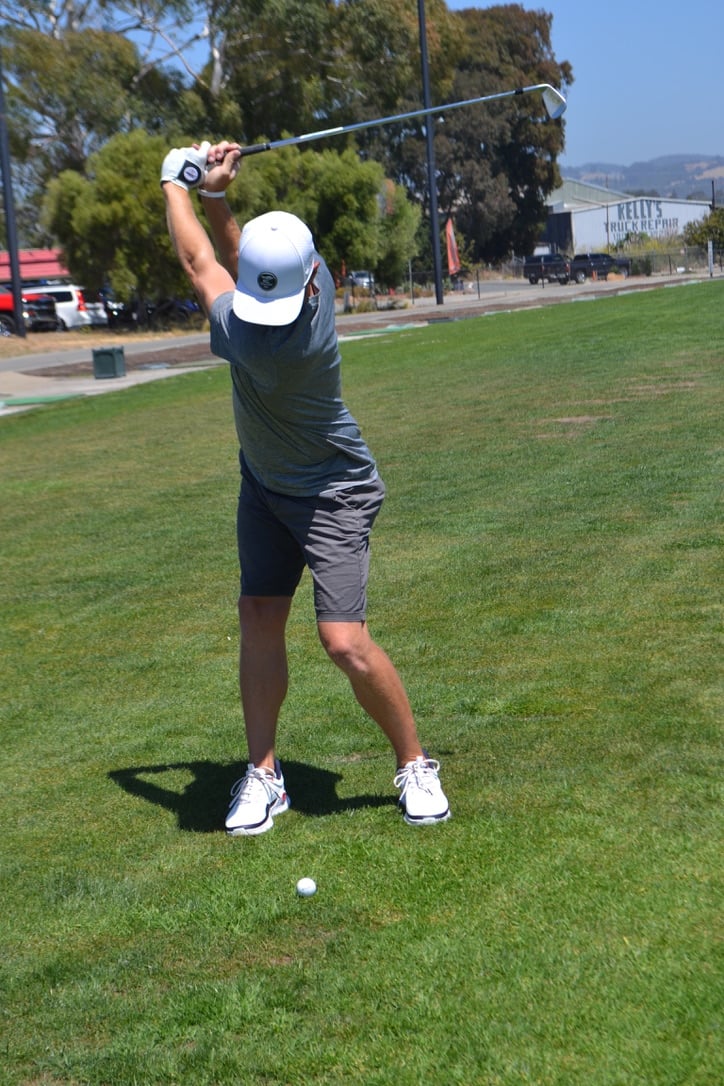
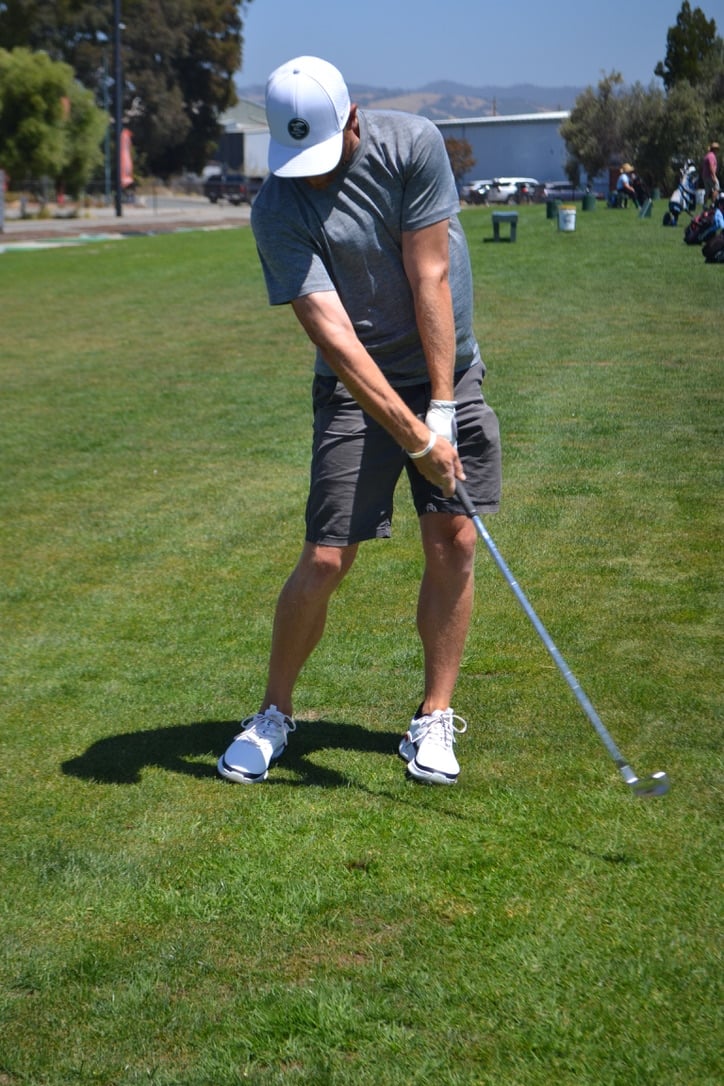
When working with Woody Wright he had me take a six-finger grip; that is, the forefingers and thumbs were off the handle. It is a drill, not a grip you want to use during your round, but it will transmit a feel for the clubhead. Furthermore, and this is for actual play, I recommend a grip with all your fingers on the handle of the club; the baseball grip.
You will know you have made a good release of the club at impact when in the follow-through, the hands and the clubhead go out toward second base. Fred Couples and Vijay Singh are good examples of that.
Overall, you want an overall feeling of relaxation at address. No tension in your arms, hands, torso.
There are other ways to obtain the feel of the clubhead from start to finish. I have students new to the method start with a hybrid club. There is weight in the clubhead that transmits a feel for tit, and the length of the club encourages a full, complete backswing.
Also, and again if the ball is going to the right of your target, I recommend taking a shorter iron – a 7-iron – and with it hit balls toward a target. The release of the club at impact will occur because you are thinking only of that and not considering any mechanics to make it happen.
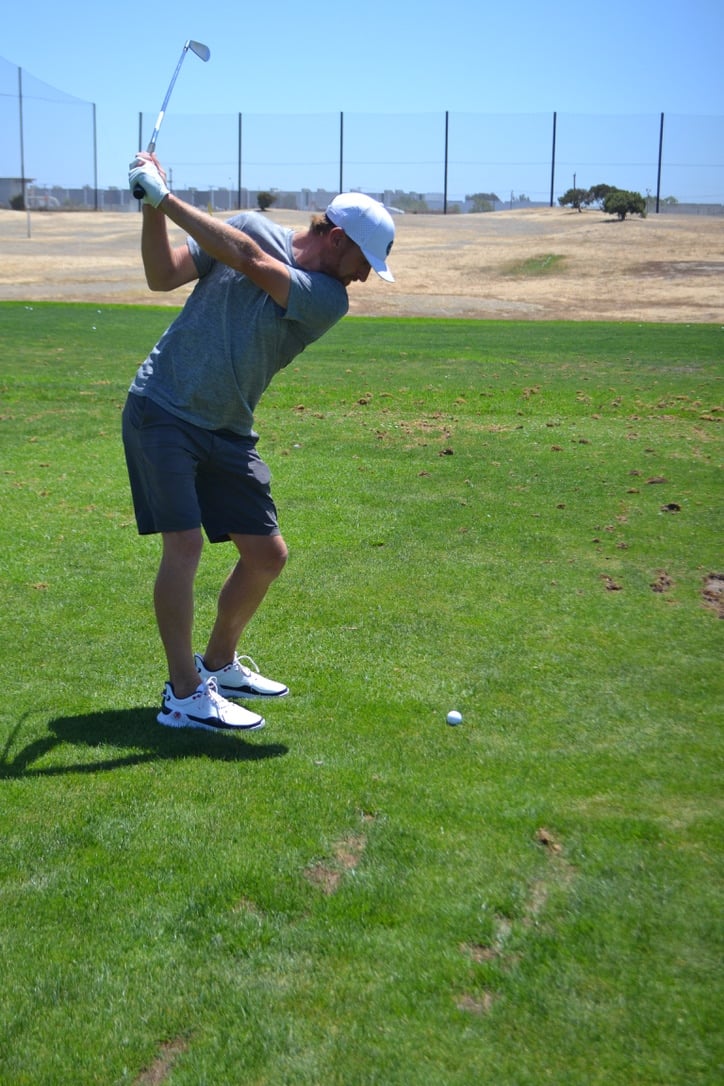
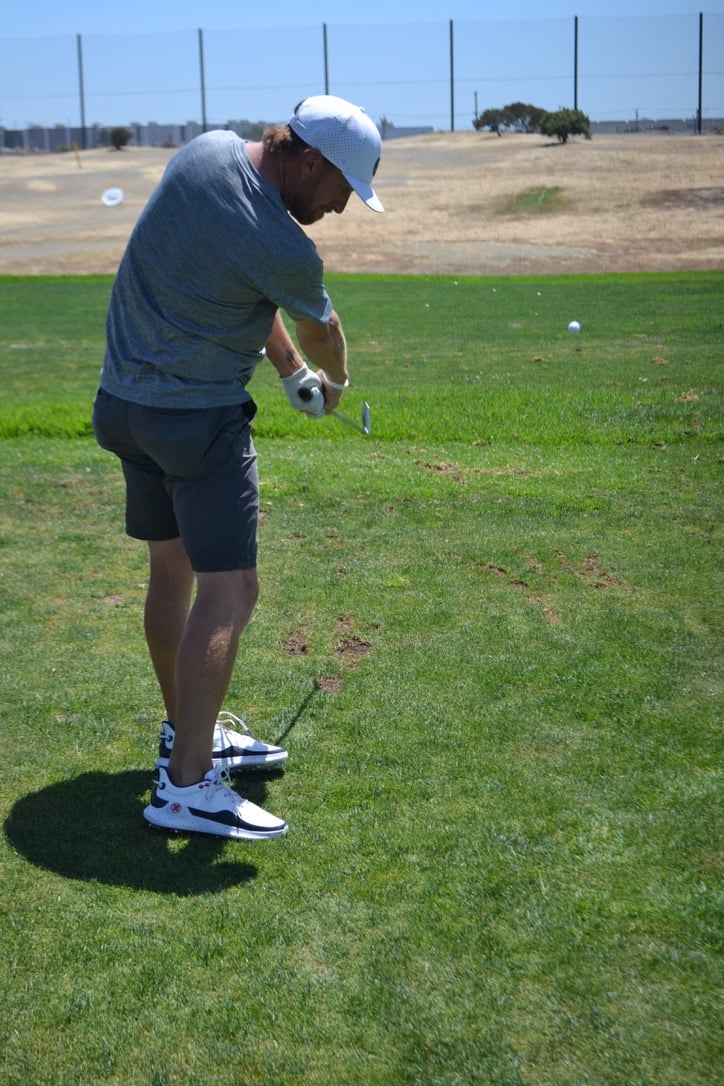
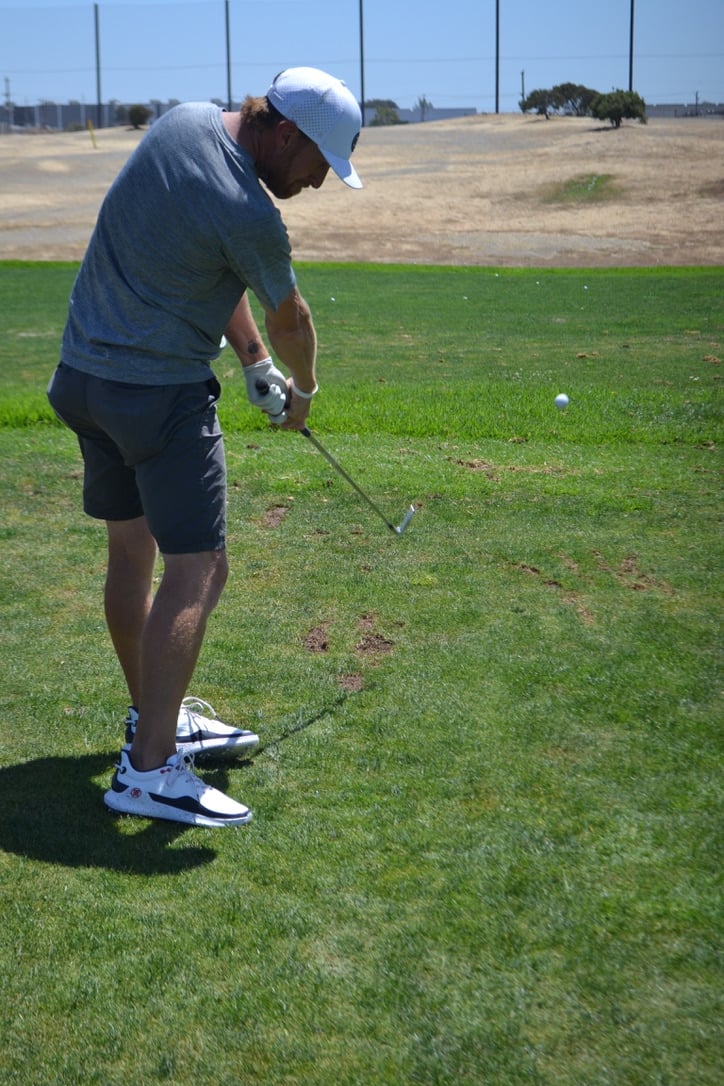
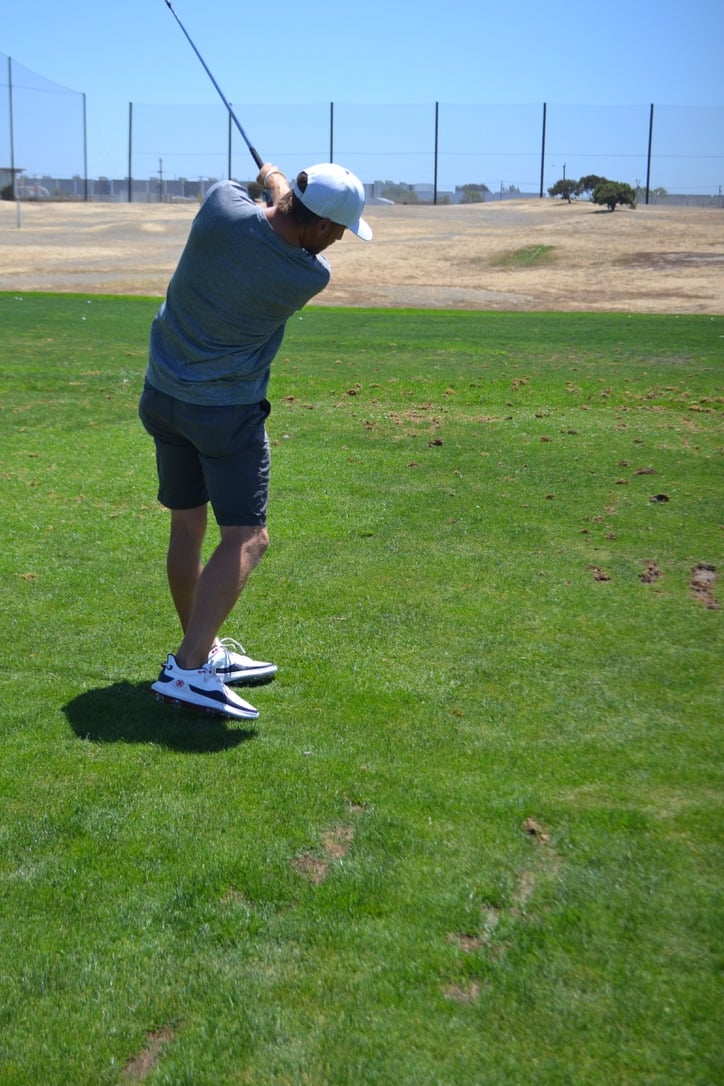
My view is to not tell the student everything I know about the golf swing. I want to help them understand that the release – indeed, the whole swing – will come if you just let it happen. It’s a matter of natural instinct. You mean to hit the ball so you release the clubhead at the ball because your body, your sense of it tells you just as you know without thinking or someone reminding you. Just as you drive a nail with a hammer. You need to trust your instincts. It begins with dropping the notion that you must swing hard to get distance. This, too, admittedly, is also a natural response to what you are planning with a golf club. But it has been proven many times that if you swing with good rhythm—and do not try to kill the ball--you will get consistently better hits and direction, and just as much if not more distance.
I remember watching a young tournament player on the range with his coach, and after every shot the coach would analyze the swing and go through a litany of do-this, do-that, don’t do this, don’t do that. It’s what I call over-teaching. What you want to do is play golf not golf swing.
Bio: Dede Moriarty, a native of San Francisco and member of the NCPGA Hall of Fame, grew up playing golf at Harding Park. She routinely has been named as a Top Teacher in California by Golf Digest and Golf Magazine.