
This article originally appeared in the September issue of NCGA Golf Magazine
By Meredith Lobeck
Parents often ask golf professionals, “What is a good age to start my child playing golf?” The answer may surprise them. Children can be introduced to golf much earlier than many people think, as long as the experience is designed for their age, attention span and stage of development.
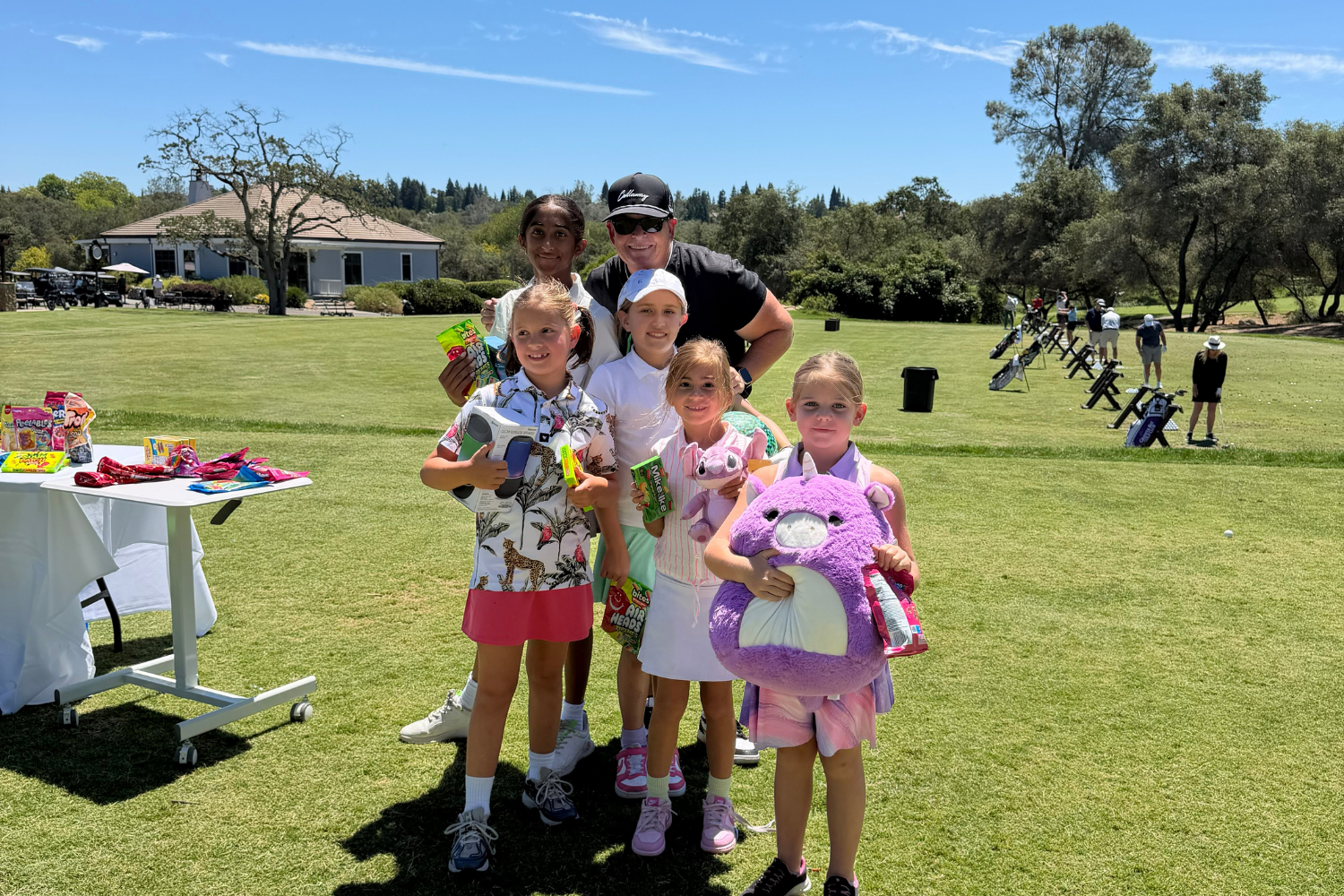
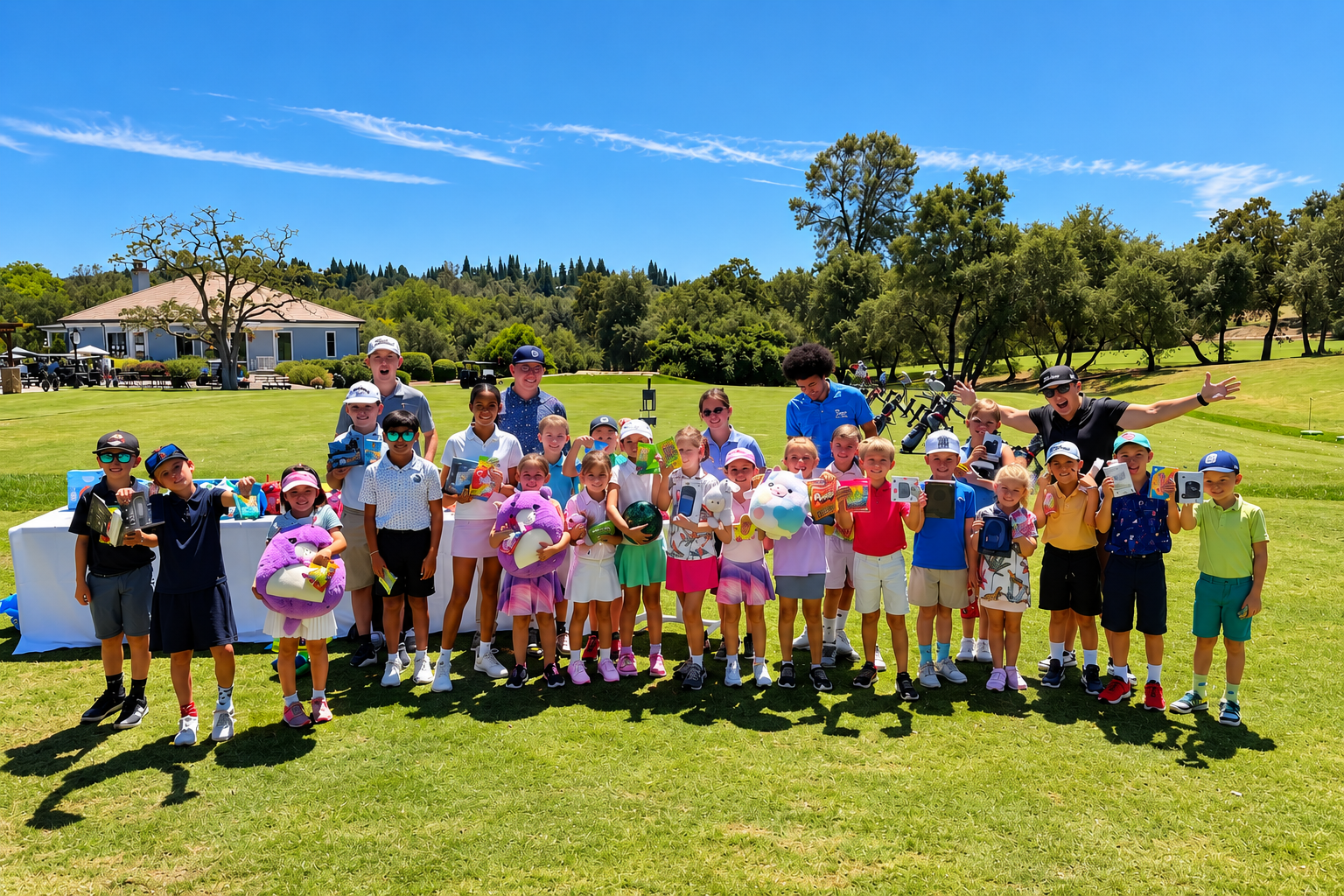
At Granite Bay Golf Club, we begin our youth golf programs at 3 years old. But a golf class for a 3-year-old should look very different from a lesson for an 8-, 12-, or 16-year-old. For our youngest golfers, the goal is not to create the perfect swing or teach every rule of the game. The goal is much simpler: make golf fun, make it welcoming, and make them want to come back.
The secret to teaching preschoolers is play. The play does not take away from the lesson. It motivates them. In fact, for young children, play is not a break from learning. Play is how they learn.
Young children learn through movement, repetition, imagination, color, rhythm and discovery. When we build those things into a golf class, they begin learning important skills without ever feeling as though they are being taught in the traditional sense.
Imagine you are 3 years old. You are riding in the back seat of your parent’s car, sitting just high enough in your car seat to see out the window. As the car pulls into the club, you spot the putting green. It is filled with colorful balls, bright dots, pool noodles and all sorts of interesting things. You point. You stare. You wonder what Coach has planned for you today. You can hardly wait for Mom or Dad to unbuckle your seat and get your little golf bag out of the car.
With your golf bag on your back and your parent’s hand in yours, you walk toward the putting green. Your coach welcomes you by name. There is a special place for your golf bag, and you quickly recognize the colorful dot on the green where you usually stand. We call those dots our “magic shoes.” When your feet are on your magic shoes, you know you are ready to begin.
Before we ever put a club in a child’s hands, we may simply ask them to roll a colorful ball toward the hole. The ball travels across the green and, with a little luck, drops into the cup. Plop! Everyone cheers. The children smile. Moms and dads smile. Coach celebrates.
To an adult, it may seem like nothing more than rolling a ball into a hole. To a 3-year-old, something exciting just happened. They made the ball go where they wanted it to go. Everyone saw it. Everyone celebrated it. And now they want to do it again.
That is where learning begins.
We may then move to another station where colorful pool noodles have been shaped like rainbows. The children roll their balls underneath the rainbow and watch them travel toward the hole. At another station, there may be a large circle around the cup. Everyone rolls or tosses a brightly colored ball toward the circle at the same time, and suddenly the putting green is alive with color and movement.
The children watch the balls roll in different directions. They see some go fast and others stop short. They hurry over to see where their ball finished. They are laughing, moving, watching, and learning.
What they may not realize is that we are already introducing some of the most basic concepts in golf. They are learning speed, direction, distance, and targets. They are beginning to understand how a ball moves across a putting green. They think they are playing, but they are also developing skills that will eventually become part of their golf game.
When the putters come out, we continue to keep the instruction simple. The children return to their magic shoes. We teach them that when they hold the putter, their thumbs point toward the ground. Instead of talking about stroke mechanics or tempo, we use words they already understand.
One of my favorite techniques is to ask each child to choose two favorite animals, characters, or things they love. A child might choose “Unicorn” and “Dolphin.” As the putter moves back toward the back foot, they say, “Unicorn.” As it moves toward the hole, they say, “Dolphin.”
Unicorn … Dolphin.
Unicorn … Dolphin.
To the child, it is a game. To the coach, we are beginning to teach rhythm and a smooth back-and-through motion without overwhelming them with technical language.
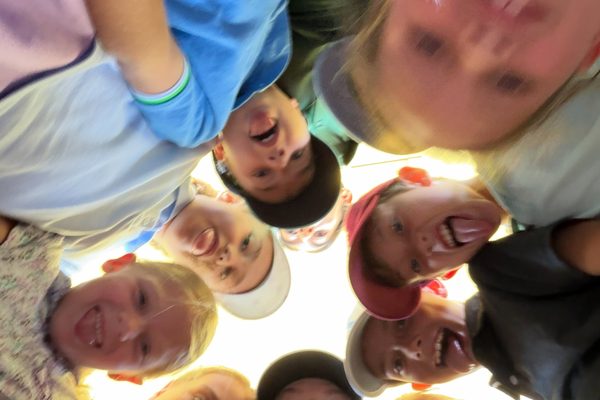
Not every putt is going to go in, and that is perfectly fine. At this age, success is not determined by a score. It is measured by participation, confidence, curiosity, and joy. Did they stand on their magic shoes? Did they make a stroke? Did the ball move toward the target? Did they smile? Did they want to try again?
Those small successes matter.
One of our favorite parts of class often comes at the very end, and it has nothing to do with making a golf swing. We goladybug hunting.
We tell the children that sometimes ladybugs live inside the holes on a golf course, and it is our job to check on them. The children carefully remove the flagsticks and gently place them beside the holes. Then they peer down into those mysterious white cups and investigate.
Maybe there is a ladybug.
Usually there isn’t.
But that never seems to diminish the excitement. There is always hope that next week will finally be the week we find one.
What the children may not realize is that another golf lesson is taking place. They are learning how to handle a flagstick carefully, how to move around a putting green, how to take care of the golf course, and how to respect the place where the game is played. We are teaching etiquette without ever giving a three-year-old a lecture about etiquette.
That is the beauty of teaching young children. The lesson does not always have to look like a lesson.
So, how young is too young for golf? There really is no single age that applies to every child. Some children are ready to explore the game at three years old. Others may not show an interest until they are five, seven, ten, or even older. Starting early does not guarantee future success, and starting later certainly does not mean a child has missed an opportunity.
A better question for parents may be, “What kind of golf experience is appropriate for my child right now?”
For a 3- or 4-year-old, the answer is usually an experience filled with color, movement, imagination, short activities, simple directions, and lots of encouragement. As children grow, the program can grow with them. Classes can gradually become more structured and include more skill development, longer periods of practice, on-course play, rules, etiquette, competition, and eventually more detailed swing instruction.
The teaching should grow with the child.
One of the biggest mistakes adults can make is giving a preschooler an adult version of a golf lesson. Young children do not need long technical explanations or constant swing corrections. They need opportunities to explore, move, laugh, succeed, and try again. There will be plenty of time later for block practice, swing mechanics, scorecards, launch angles, and tournament golf.
At 3 years old, the most important scorecard may be much simpler. Did they have fun? Did they learn something? Do they want to come back next week?
If the answer to those questions is yes, the lesson was a success.
Parents can follow the same philosophy when introducing golf on their own. Give children a target rather than a technicalinstruction. Let them choose a favorite-colored ball. Create a game. Celebrate when they make contact. Let them roll a ball into a hole before asking them to putt it. Let them toss a ball toward a target before explaining how a clubface works. Keep activities short and change them before boredom sets in.
Most importantly, finish while they still want more.
A child’s earliest experiences with golf can shape the way they feel about the game for many years. If those experiences are filled with laughter, encouragement, imagination, and time together, we have accomplished something far more meaningful than creating the perfect golf swing.
We have helped create a young golfer who believes golf is a place where they belong, a place where they can have fun, and a place they cannot wait to visit again.
And who knows? Maybe next week will finally be the week they find that ladybug.
Meredith Lobeck, a PGA/LPGA member, is the Director of Player Development at Granite Bay Golf Club. She was the recipient of the 2026 Northern California PGA Youth Development Award.