
November 20, 2026 / by Emily Van Buskirk
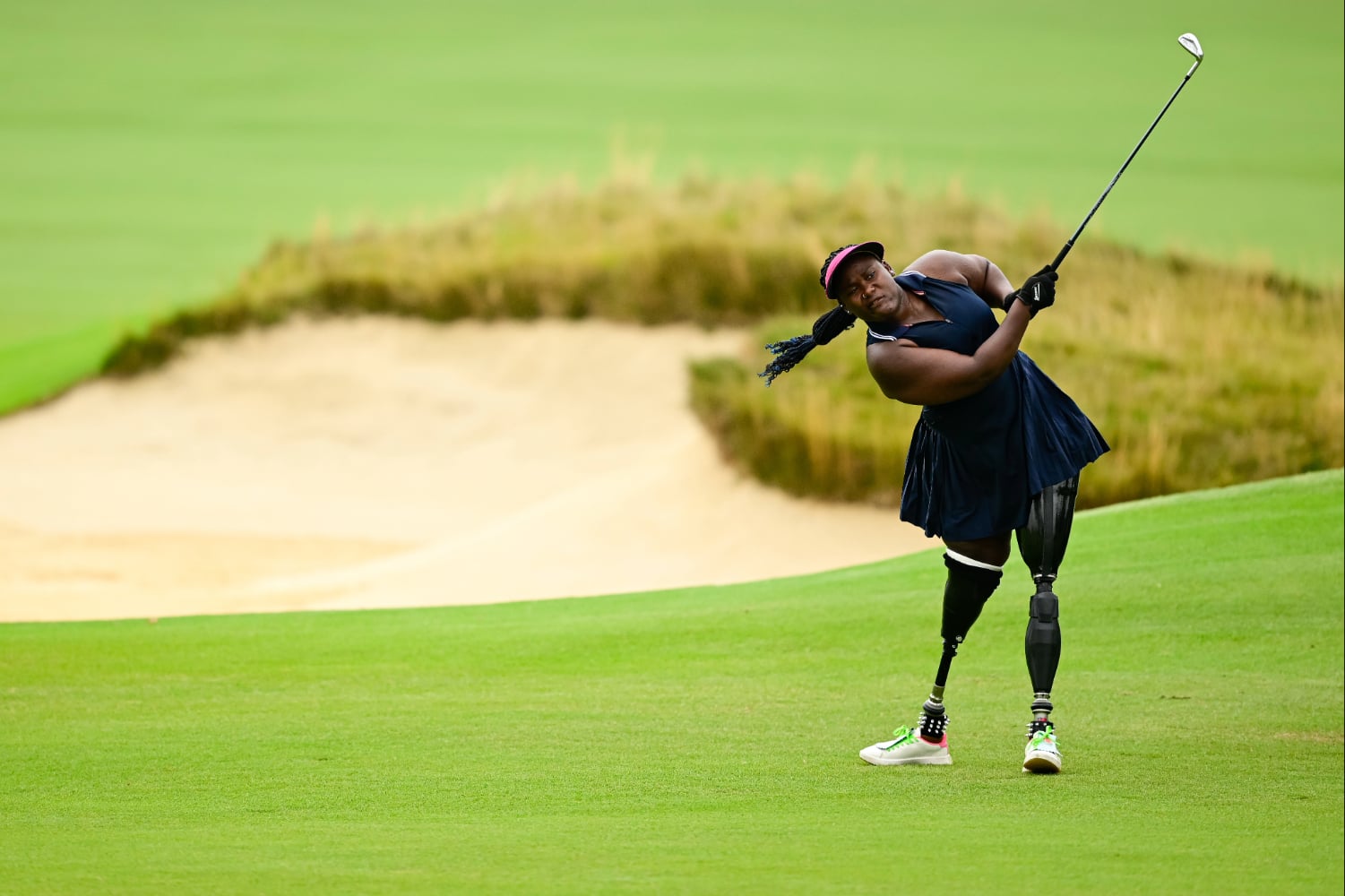
From first-time golfers to national champions, adaptive athletes are showing us just how many ways there are to play the game we love.
Golf has a funny way of bringing people together. Different backgrounds, different abilities, different swings, and somehow, we're all chasing the same little white ball around a patch of grass.
And if there's one thing this game has taught us, it's that there's no single right way to play it.
For adaptive golfers, that idea takes on a whole new meaning. Whether navigating the course with a physical disability, adjusting a swing after an injury or competing at the highest levels of the sport, these athletes are proving that golf is a game with room for everyone.
And as adaptive golf continues to grow across the country, so do the opportunities to discover the game, connect with fellow golfers and compete and help grow awareness and inclusivity.
Different Swings. Same Love for the Game.
Spend a little time with Chuck, an amputee golfer I met at a charity tournament at Turkey Creek Golf Club, and you'll quickly realize that his sense of humor is just as strong as his love for golf.
Chuck plays with a prosthetic leg, which means his golf swing looks a little different from the traditional textbook version. After his amputation, he had to relearn how to play a game he'd enjoyed for years.
One of the biggest adjustments? Weight transfer.
"I can't shift my weight to the left side, to the forward side," Chuck explained. "I can put it there and keep it there, which is one of the strategies for hitting it. But I can't shift it."
For most golfers, shifting weight through the swing is second nature. For Chuck, it required an entirely new approach.
His golf instructor helped him develop a swing built around his abilities, including keeping his weight planted on his left leg. The instructor also suggested something that might make a few golfers swallow their pride: moving up a tee box.
Chuck initially resisted the idea, until his instructor offered a pretty convincing argument.
"Come on, you're playing on one and a half legs," Chuck recalled him saying.
Fair point.
The exchange is funny, but it illustrates something important about adaptive golf.
The goal isn't necessarily to play the game exactly as everyone else does. It's to find a way to make the game work for you.
And sometimes, that means a different swing, different equipment or a different set of tees.
Adaptive Golf Is Having a Moment
If you think adaptive golf is limited to recreational rounds or introductory clinics, think again.
Since the inaugural U.S. Adaptive Open in 2022, the competitive side of the sport has experienced remarkable growth.
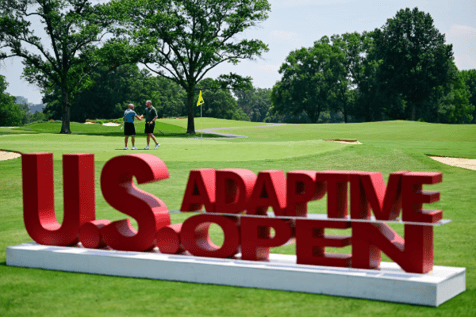
According to Colton Dean, Director of Championships for the U.S. Adaptive Open, only three Allied Golf Associations (AGAs) were conducting adaptive golf competitions or involved in adaptive programming when the championship launched.
Today, that number has grown to more than a dozen.
And the talent? It's catching up just as quickly.
"There's a misconception that adaptive golf is more recreational than competitive, but at the top of the sport these athletes work incredibly hard and are some of the best players in the world," Dean said.
In fact, Dean has seen competitors improve by 20 to 30 strokes per round between their first U.S. Adaptive Open appearance and more recent championships.
That's not just progress. That's serious golf.
But the beauty of adaptive golf is that it doesn't begin or end with elite competition.
"I think one of the things people quickly come to understand is that golf really is a game for everyone," Dean said.
At the grassroots level, that might mean someone picking up a club for the first time after an accident. At the highest level, it might mean an athlete competing for a national championship.
Different experiences, different goals, but the same opportunity to fall in love with the game.
Making the Game More Accessible
As adaptive golf continues to grow, so does the conversation around how to make the sport more accessible to players of different abilities.
And we're talking about more than just navigating the occasional water hazard.
Equipment, facility accessibility, awareness and availability all play important roles in helping golfers discover and continue enjoying the game.
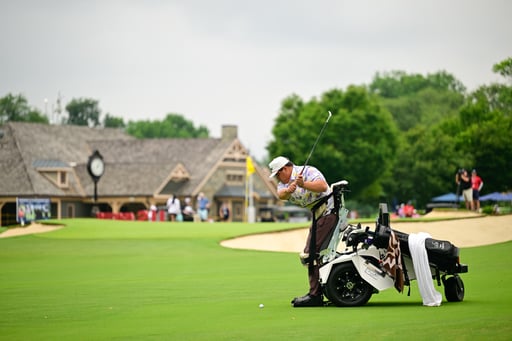
For some players, specialized equipment can make all the difference. Adaptive golf carts, including those designed for seated golfers, can help individuals with mobility limitations navigate the course and participate more comfortably.
For others, the biggest challenge may simply be knowing where to begin.
"We can introduce someone to golf and help them fall in love with the game, but if they don't have an accessible facility or the equipment they need close to home, it becomes difficult for them to continue playing," Dean explained.
Organizations such as the United States Adaptive Golf Alliance and the National Alliance for Accessible Golf are helping advance conversations around accessibility, education and opportunities for participation.
And while equipment and facilities are important, there's another side of accessibility that can be just as meaningful: the people you meet along the way.
Chuck has experienced firsthand how other golfers sometimes aren't quite sure how to interact with someone with a disability.
Not because they're unkind. Often, it's quite the opposite.
"They're intimidated about asking questions. They're so curious, but you can usually see it on their faces," he explained.
Sometimes fellow golfers will rush to retrieve his ball or offer assistance with something he's perfectly capable of doing himself.
He appreciates the intention, but as he jokingly puts it, "I'm not helpless here!"
His solution? Break the ice.
A little conversation, a few questions and maybe a laugh or two can go a long way toward making everyone more comfortable.
Because at the end of the day, most golfers have plenty in common. We're all looking for a good round, good company and maybe a few more birdies than bogeys.
Finding Your People, Finding Your Game
After his amputation, Chuck connected with the Gold Country Amputee Support Group in Auburn, California.
What he found was more than a group of people with similar physical experiences. He found a community that understood the questions, frustrations and adjustments that come with life after amputation.
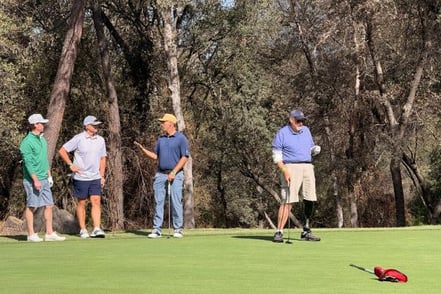
Chuck estimates that the group now brings together roughly 12 to 15 people at its monthly meetings.
For someone who has recently undergone an amputation, hearing from others who have already navigated that experience can make a tremendous difference.
"Anytime a new person shows up, it's kind of like a 12-step group," Chuck explained.
Members share their stories, answer questions and help newcomers feel more comfortable navigating unfamiliar territory.
That sense of community translates naturally to golf.
The tournament at Turkey Creek offered a glimpse of what happens when people come together around a shared passion. Players with different experiences and abilities enjoying the same course, the same competition and, yes, the same occasional frustrations that come with golf.
Because whether you're playing with two legs, one leg or from a seated position, a three-putt is still a three-putt.
And the connections made along the way can mean just as much as the score.
Growing Opportunities, On and Off the Course
One of the most exciting developments in adaptive golf is the growing variety of ways athletes can get involved.
From introductory clinics and recreational outings to organized competitions and national championships, adaptive golf is creating opportunities for players with different interests, experience levels and competitive goals.
And there's no reason those opportunities need to look the same for everyone.
For a beginner, a welcoming clinic and an instructor familiar with adaptive techniques might be the perfect introduction.
For a recreational golfer, finding a regular playing group can turn an occasional round into a lifelong hobby.
And for competitive athletes, events such as the U.S. Adaptive Open offer the chance to test their skills alongside some of the best players in the sport.
Here in Northern California, our diverse golf community, experienced instructors and wide variety of courses provide a valuable setting for continued conversations about adaptive golf and participation.
For Chuck, the possibility of additional organized playing opportunities is an exciting one.
When asked whether Northern California could benefit from more adaptive golf opportunities, his response was refreshingly simple.
"Why not?"
It's a question that reflects the enthusiasm surrounding a growing part of the golf community.
As more players discover adaptive golf and more organizations explore ways to support participation, there's plenty to be excited about.
And whether that means learning about adaptive equipment, attending an introductory clinic or simply welcoming a new playing partner into your foursome, every connection helps strengthen the golf community.
More Than a Game
One of Dean's favorite stories from the U.S. Adaptive Open involves Karen Veriato, a longtime USGA competitor living with Parkinson's disease.
After fellow competitor Bailey Bish learned about Veriato's diagnosis, she encouraged her to participate in the championship.
It's a small example of something much bigger: what can happen when someone sees an opportunity for another person and invites them to be part of it.
Sometimes, growing the game involves developing new programs, expanding resources or creating competitive pathways.
Other times, it's as simple as saying, "Hey, there's a place for you here."
And that's what makes adaptive golf so special.
It isn't about celebrating athletes simply because they play with a disability. It's about recognizing their talent, determination, individuality and love for the game.
As Dean put it, "We all share the same love for this game, and everyone deserves the opportunity to experience what makes it so special."
The future of adaptive golf is exciting, not just because of the talent on display at national championships, but because of the people discovering the game for the first time, the friendships being formed and the communities growing around a shared passion.
Chuck's story is just one example of the many different journeys that can lead someone to the first tee.
And while every golfer's experience may look a little different, the reasons we keep coming back are often remarkably similar.
The challenge. The camaraderie. The occasional perfect shot that makes us forget the dozen not-so-perfect ones that came before it.
Different swings. Different stories. Same love for the game.
And that's something every golfer can appreciate.