
This article originally appeared in the July issue of NCGA Golf Magazine
Even Through Dark Days, Golf Has Been a Light for Former California Amateur Champion Cory McElyea
By Tod Leonard
As Cory McElyea lay in bed, his body wracked by a mysterious illness that would take months to understand, there were few things that could relieve his feeling of despair and helplessness. His future wife, Kate, was doing all that she could to make him as comfortable as possible, but McElyea’s mind would understandably drift to dark places over hours and hours of nothingness.
There was one antidote that became his biggest relief: golf.
A Tiger Woods fan for as long as he could remember, McElyea escaped his circumstance through watching, over and over, the highlights of Woods’ prime. Those alone could fill many a day. But there were images for him even stronger than that. In reels that ran through his head, McElyea could click through the bright points in his own golf career, of which there were many.
He was so good in junior golf that McElyea was offered playing privileges at the Alister MacKenzie masterpiece, Pasatiempo Golf Club, in his hometown of Santa Cruz. Twice in a short span, he fired the course record of 60 at his true home track, the public DeLaveaga Golf Course.
McElyea played in college at the University of Washington and University of San Francisco, twice earning First-Team All-WCC honors at the latter, and in the summer before his senior year, McElyea qualified for the 2013 U.S. Open at Merion Golf Club. Over two weeks that June, he would produce the biggest golfing thrills of his life.
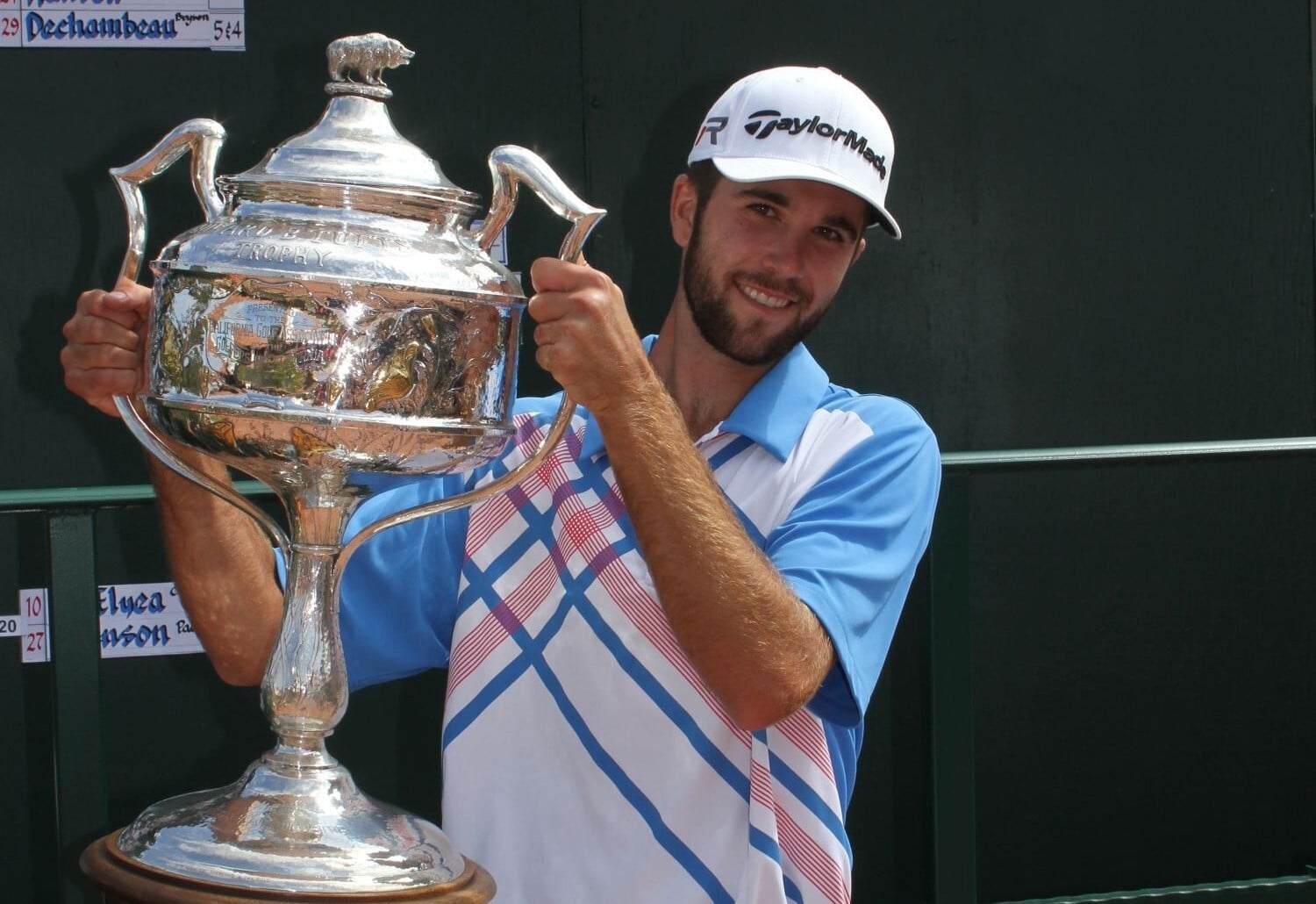
Two days after he missed the cut in Pennsylvania, McElyea was on the first tee at Monterey Peninsula Country Club for the California Amateur Championship, and more than 100 holes of competition later, he had beaten one of the future megastars of the game—a then-19-year-old Bryson DeChambeau—to lift one of the most coveted amateur trophies in the country.
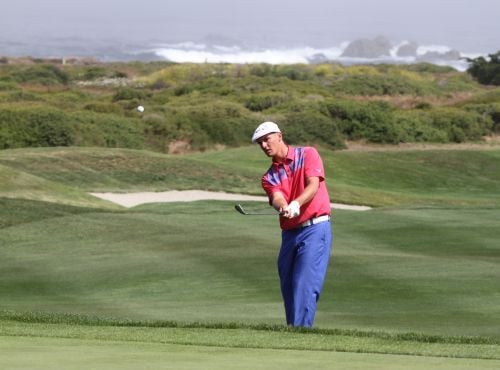
They were incredible images to hold onto for a man who’d spent many of his healthy waking hours thinking about this game he loved. In the depths of his illness, when McElyea didn’t know if he would ever be able to stand upright again, those same visions provided comfort, hope and motivation that he’d someday be on lush green grass, swinging a golf club again.
In early May of this year, after years of working on his recovery, McElyea played in the U.S. Open local qualifier at Stonebrae Country Club in Hayward, and with Kate pushing his bag on a cart, he nearly pulled off something extraordinary in his first competition in seven years. McElyea made six birdies in shooting 2-under-par 70 but bogeyed the final hole to miss out on a playoff for the last spot to reach Final Qualifying for the U.S. Open at Shinnecock Hills. The result was hardly crushing for a couple who had been through so much.
“It was just so cool,” McElyea, 34, recalled in a recent interview. “There were a lot of times throughout that round of trying to pull myself together and not fall apart emotionally on the golf course, because at one point I didn’t think I’d be able to walk again.”
McElyea, who had grinded on pro golf’s mini-tour circuit for several years before transitioning into electrical sales, first began experiencing health troubles in July of 2022. Earlier that year, he had what he believed was a mild case of COVID-19. But months later, he began experiencing gastrointestinal issues and began losing weight. (He’d eventually go from 185 pounds to 125.) Various tests did not reveal a specific cause, and then McElyea’s condition grew worse. He experienced brain fog and anytime he would stand up, he’d feel dizzy and his heart would race.
Doctors eventually diagnosed McElyea with dysautonomia, a term that covers numerous disorders of the autonomic nervous system. The symptoms can include lightheadedness, fainting, unstable heart rates and chronic fatigue. McElyea experienced all of those effects, and he was diagnosed with Postural Orthostatic Tachycardia Syndrome (POTS), which caused his heart to race every time he stood up.
The conclusion by McElyeah’s doctors was that he was suffering from Long COVID, but they seemed to have few answers as to how he could be helped to feel better.
“Every day I felt like I was going to die, and there were no real answers as part of it,” McElyea said.
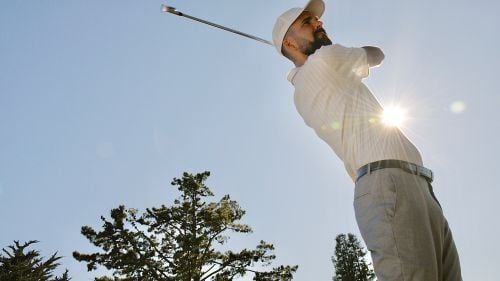
“I’d stand up and my heart rate was going like crazy. It felt like I was breathing through a straw. I was in bed not able to function. Not working for almost a year and a half. I was a shell of my former self.”
Cory and Kate began dating in 2020 and she knew zero about golf or McElyea’s athletic success but enjoyed his self-confidence and sense of humor. Then she saw his life begin to crumble before her eyes.
“His energy just plummeted, and he was just not himself,” she said. “He went from being this fun-loving guy who was full of life to being someone who was just so sad and depressed, and he couldn’t get out of bed. He went from being a professional athlete to not being able to walk down the driveway.”
The entire year of 2023 was a troubling and disheartening blur, but in 2024, McElyea found a specialist who would ultimately restore his health. Dr. Tonya Fleck, a licensed Naturopathic Doctor and founder of the Santa Cruz Naturopathic Medical Center, performed numerous tests and among her findings was that McElyea’s hormones, as he put it, “were completely out of whack.”
Particularly troubling was how low his testosterone levels were. “I was 34 and she said I had the levels of a 90-year-old man,” McElyea said.
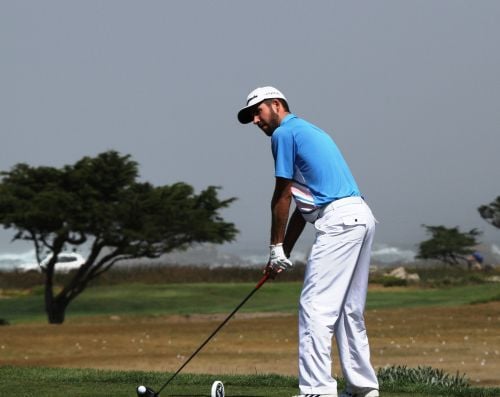
McElyea began testosterone replacement therapy. “That’s what kind of helped me out of the weeds,” he said.
It would take months for McElyea to truly feel like himself again, and he still can feel unsteady at times. But he has returned to work in sales for medical supplies and he’s practicing and playing golf regularly again.
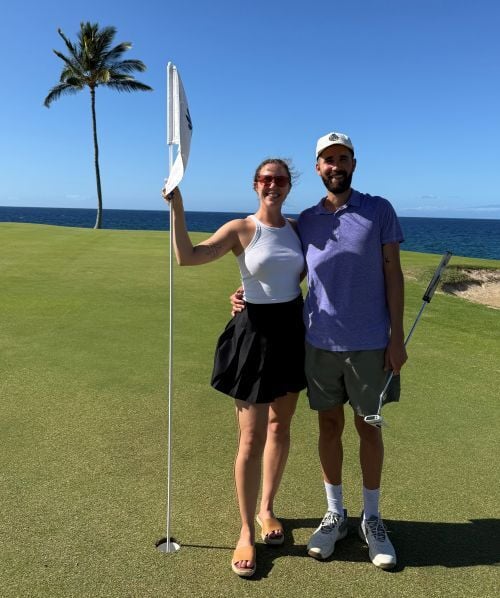
When McElyea first felt well enough to finally travel, he and Kate planned a trip to Hawaii. Golf wasn’t on the itinerary, but the couple was having such a wonderful time that Cory decided he’d like to get out for nine holes. Kate rode in the cart with him and basically saw his transformation happen before her eyes.
“He was falling back into what feels so intuitive and so innate,” she said. “It was like watching him come back to life, truly. That was a really, really beautiful moment.”
With little perspective on Cory’s golf accomplishments earlier in his life—other than his childhood room being preserved with his medals and trophies—Kate has come to understand that he was a big deal back in the day. At the recent U.S. Open qualifier, Cory was grouped with a couple of younger players, and when she happened to mention his State Amateur victory, the other golfers’ eyes lit up. “It completely changed the vibe of the group,” she said.
When McElyea is around his home course of DeLaveaga, there are frequent conversations that include one word: “DeChambeau.”
The name is recognizable to every golf fan now because Bryson DeChambeau is one of the game’s largest and most successful personalities. Back in June of 2013, he was a skinny teenager from Clovis who had finished his freshman year at SMU and was on his way to winning the prestigious Trans-Mississippi Championship later that summer. Two years after that, DeChambeau captured the NCAA Individual championship; the next year he was the U.S. Amateur champion; and five years later he won the first of his two U.S. Open titles.
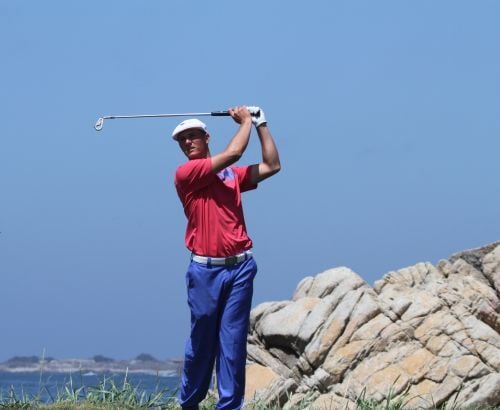
Of the two, McElyea was the first to play in the U.S. Open. He qualified in 2013 for Merion by emerging from a playoff, alongside Max Homa, in Final Qualifying. The weather early that week in Pennsylvania was awful, and after a weather delay, McElyea stepped to the first tee, with his brother Conor on his bag, and saw thousands of people lining the fairways. He remembers Bubba Watson and Dustin Johnson being in the vicinity.
“That was truly the most nervous I’ve felt in my life,” McElyea remembered with a laugh. “I told my brother, ‘I can’t feel my hands or legs right now, so I’m just going to go with my go-to, grab a driver and I’m just going to chip it.’ Teed it low, chocked up and just ripped that thing, smoked it right down the middle.”
McElyea shot 81 in the first round, followed by 79, and though he was gone after finishing the rain-delayed second round on Saturday, the experience only deepened his aspirations and love for competition.
“Feeling it, internalizing, I wanted it more than anything,” he said. “It was so many new emotions and nerves … being around the best players in the world. It became almost addicting. I wanted to feel those feelings again.”
That experience likely led to what transpired over the very next week in the 102nd California State Amateur. Still in a competitive groove and putting superbly, McElyea blew through stroke play and then four match-play opponents to reach the final for the first time.
He admitted that he knew little about DeChambeau, other than he used the same length for every club. “Thought that was kind of weird,” McElyea said. His first impression? “He was a scrawny kid, nothing like he is now. His ball-striking was really, really solid. The sound he made with a 6-iron was just different.”
As they played, McElyea noticed some quirks, too. “Me and my brother got frustrated at times with his pace of play. Very methodical. He would take a long time on the greens. It would make more sense later when you understood how science-based he was.”
All the science in the world couldn’t help DeChambeau when he started the final slowly and McElyea played well in building a commanding 7-up lead through 12 holes. “That was almost like a curse because it was so early,” McElyea said.
And, indeed, DeChambeau fought back, whittling away at the lead to eventually be just 2-down through 21 holes. But that’s as close as he would get. The true turning point in the match came at the ninth, where it appeared that DeChambeau might win the hole, only to watch McElyea dunk an eagle from 60 yards with his 60-degree wedge to go 4-up.
In a video from that day, McElyea gently tosses his club and raises his arms when the ball drops in and then shares a brief hug with his brother.
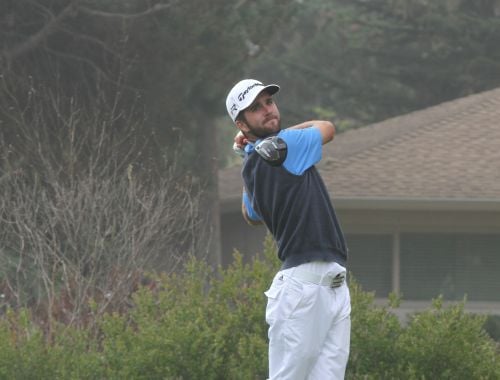
“One of the best wedge shots ever in my life,” McElyea recalled. “It was a huge moment, for sure.”
He went on to secure the match on the 34th hole to win 3 and 2. McElyea grinned broadly when he lifted the enormous trophy that at the time sported the names of 101previous winners, including the likes of major champions Johnny Miller, Ken Venturi, Mark O’Meara and Gene Littler.
“I had come so close in bigger amateur events, but had never crossed the finish line,” McElyea said. “Winning solidified the confidence I had in myself as a player. It was a heck of a two weeks, quite the grind, and winning was a relief.”
The grind to reach the upper levels of professional golf would continue for years, but McElyea never made it past the opening stage of Qualifying School, and after years of toiling on mini tours while supporting himself with caddie jobs, he put the dream aside to make a consistent living in sales.
Then he met Kate. Then he got sick. Golf was still there for him in his darkest hours. If McElyea once pined for being in the pros, he’s now simply grateful to play again and get a competitive charge out of truly contending, as he did in the qualifier, to possibly play in a U.S. Open. He’s overcome far worse odds.
“You know, when I was just trying to walk down the hall, I was just thinking of being back on the golf course,” McElyea said. “No matter what I’ve done professionally outside of golf, it’s what I think about and it’s what occupies my brain.”