
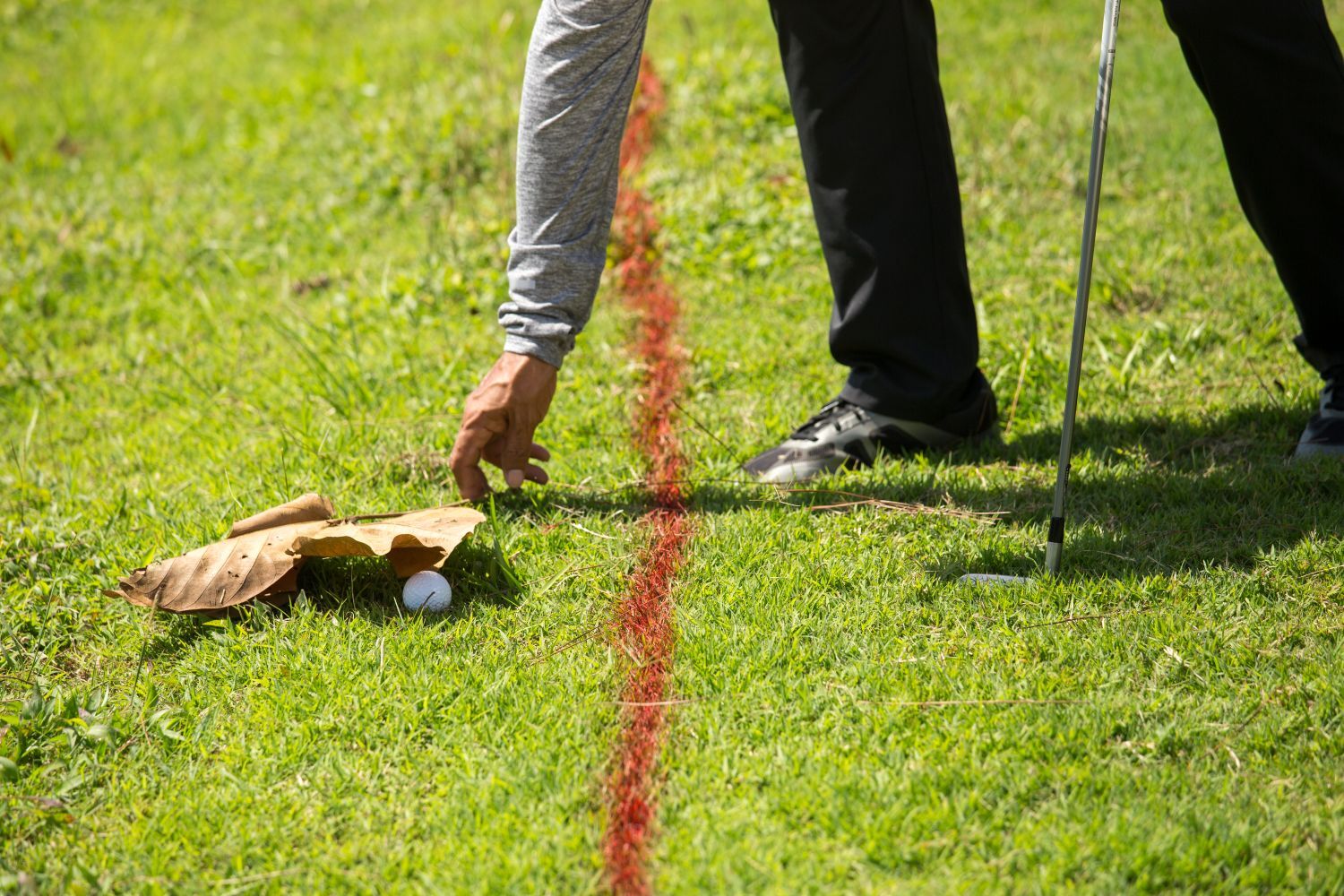
Well, then, test yourself with our annual Rules Quiz. The following are all based on actual situations that occurred during the 2025 season. Remember, knowing the Rules can save you strokes!
By Ryan Gregg, NCGA COO
1. In match play, a player’s ball came to rest on the fringe of the putting green. The player fixed several pitch-marks on the putting green which improved their line of play. What is the ruling?
-
- There is no penalty.
- There is a one-stroke penalty
- The player gets the general penalty.
- The player is disqualified.
2. In match play, an opponent accidentally moved their opponent’s ball while searching for it. What is the ruling?
-
- The opponent is not penalized, and the player may replay the stroke.
- The opponent is not penalized, and the ball must be replaced.
- The opponent gets a one-stroke penalty, and the ball must be replaced.
- The opponent loses the hole.
3. In stroke play, a player dropped a substituted ball in the right way and in the right place when taking relief from temporary water. The original ball was immediately recoverable. What is the ruling if they have not yet made a stroke at the dropped ball?
- The player must mark the dropped ball, lift it and place the original ball on the spot where the substituted ball lay.
- The player must lift the dropped ball and drop the original ball.
- The player must play the dropped ball as it lies.
- The player may play the original ball from the temporary water.
4. In stroke play, after completing the play of the 4th hole and while waiting for the 5th fairway to clear, a player made two practice putts on the nearby 10th putting green. What is the ruling?
- The player is not penalized for their actions.
- The player gets a two-stroke penalty added to the 4th hole.
- The player gets a two-stroke penalty added to the 5th hole.
- The player is disqualified.
5. In stroke play, a player’s tee shot might have been lost or out of bounds. They announced and played a provisional ball into the same area. When they get to the area, they find both balls next to each other. After playing their original ball as it lies, the player is notified that both balls were out of bounds. What is the ruling?
- The player must continue play with the original ball with a two-stroke penalty.
- The player must return to the tee and will be playing their fifth stroke.
- The player must return to the tee and will be playing their sixth stroke.
- The player must return to the tee and will be playing their seventh stroke
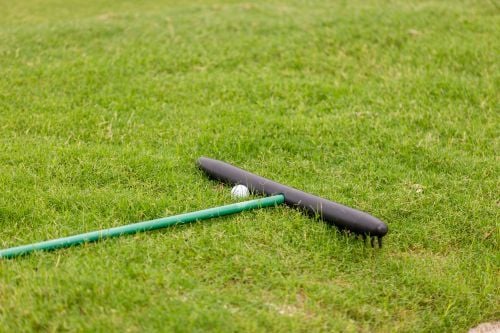
6. A player’s ball came to rest near a bunker rake. Both the ball and the rake were outside the bunker. The player moved the rake. The ball did not move. However, during their stroke they accidentally hit the rake with their club. What is the ruling?
- There is no penalty
- The player gets a one-stroke penalty for hitting the rake
- The player gets a two-stroke penalty for hitting the rake
- The player may cancel the stroke and replay
7. The player’s ball was run over by a mower and was pushed into the ground altering the lie. The player substituted a ball and dropped it within a club-length of where it originally lay and played it to the putting green. What is the ruling?
- There is no penalty
- The player gets a one-stroke penalty
- The player gets the general penalty
- The player gets three total penalty strokes
8. The player’s tee shot came to rest between some boulders in the general area. The player straddled their line of play and hit their next shot between their legs which ended up on the putting green. The player took two putts to complete the hole. What is their score for the hole?
- 4
- 5
- 6
- 7
9. In stroke play, the player’s tee shot of over 200 yards could not be found after a 3-minute search. All players in the group agreed that it must be lost in a soft, mushy area of grass. The player dropped a ball near the area and played their next stroke that ended up on the putting green. They holed their putt and then notified a Rules Official before starting the next hole. What is the ruling?
- The player proceeded correctly and scored a three on the hole.
- The player must add a two-stroke penalty, scoring a five on the hole.
- The player must return to the tee and will be playing their fourth stroke.
- The player must return to the tee and will be playing their fifth stroke.
10. A player’s tee shot was lost in a red penalty area. The player properly took lateral relief. Their stance was within the penalty area when they played their next stroke. The ball came to rest on the putting green and they finished the hole with two putts. What is their score for the hole?
- 4
- 5
- 6
- 7
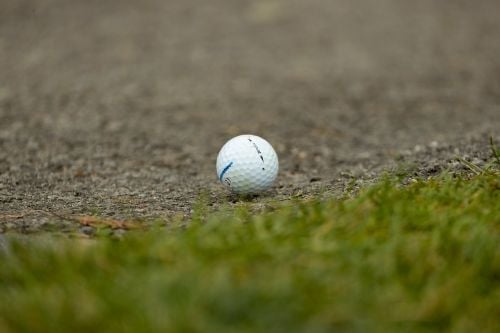
11. The player’s ball was in an animal hole within a penalty area. The player asked a referee if they were entitled to relief from the animal hole. The referee mistakenly allowed the player to take relief within the penalty area. After the player played to the putting green, the referee became aware of their mistake. What is the ruling?
- The referee must have the player place a ball in the original spot in the penalty area and either play from ball or take relief from the penalty area.
- The referee must have the player drop from penalty area.
- The player must continue play of the hole without penalty.
- The player must continue play of the hole with a one-stroke penalty.
12. In stroke play, the player’s ball was on a paved cart path in the general area. The player left the original ball on the cart path, determined their nearest point of complete relief, and dropped a ball in the right way in the correct relief area. At that point, they decided to play the hole differently and played the ball from the cart path. What is the ruling?
- The player is not penalized for these actions.
- The player gets a one-stroke penalty and must hole out with the original ball.
- The player gets a two-stroke penalty and must hole out with the original ball.
- The player gets a two-stroke penalty and must fix the mistake prior to teeing off on the next hole or be disqualified.
13. In stroke play, the player’s tee shot last crossed a red penalty area adjacent to a cart path. In taking lateral relief, the player also had interference from the cart path within the relief area. The player did not drop on the cart path as required. Instead, they took relief from both conditions by dropping within one club-length of their nearest point of complete relief from the cart path. Their next stroke ended up on the putting green. They made two putts to complete the hole. What is their score?
- 5
- 6
- 7
- 8
14. In stroke play, with the player's ball on the putting green, their caddie touched the putting green with the flagstick in pointing out the line of play without improving the conditions affecting the stroke. What is the ruling?
- There is no penalty.
- There is a one-stroke penalty.
- The player gets the general penalty.
- The player is disqualified.
15. In stroke play, the player and their caddie prepared for the tee shot on the 4th hole. As the player was beginning to take their stance for the shot, the caddie was standing on an extension of the line of play behind the ball and told the player they were aiming a little left. The player adjusted their aim to the right and made the stroke before the caddie moved. The player made their next stroke from the fairway to the green, with the caddie again standing in the restricted area and mentioning the player’s line before the stroke. The player took two putts from there to finish the 4th hole. Their actions on the 4th hole are brought up during the play of the 5th hole. What is the player’s score for the 4th hole?
- 4
- 6
- 8
- The player is disqualified
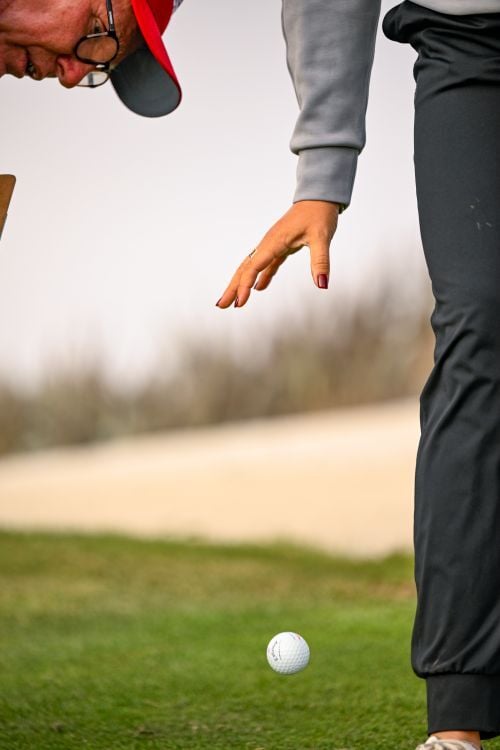
16. In stroke play, Player A’s tee shot hit the ball of Player B in the fairway causing it to move a few inches closer to the hole. Player B retrieved, cleaned and dropped the ball within one club-length on the estimated spot from which it was moved. The player played the ball to the putting green. What is the ruling?
- Player B is not penalized
- Player B gets a one-stroke penalty
- Player B gets two penalty strokes
- Player B gets three penalty strokes
17. In stroke play, a player started with 14 clubs. During the round, after playing the front nine, the player stops by their car and replaces the head of their driver by removing the original head from the shaft. They use the newly replaced head several times on the back nine. What is the ruling?
- The player is not penalized for these actions.
- The player gets a two-stroke penalty.
- The player gets a total of four penalty strokes.
- The player is disqualified.
18. In a four-ball stroke-play competition, the marker wrote the same better-ball score for both partners representing the side on every hole. However, the players did not make the same score on every hole. Both the marker and the players signed the score card and returned it to the committee. What is the ruling?
- There is no penalty as long as one of the players made the score.
- The side is disqualified since the scores are not individually identifiable.
- The marker’s side is disqualified for failing to carry out their duties properly.
- Both sides are disqualified.
Quiz Answers
- A. Rule 13.1c. Players may repair damage to the putting green whether the ball is on or off the putting green.
- B. Rules 7.4 and 9.5a. There is no penalty if an opponent accidentally causes the player’s ball to move while trying to find or identify it, but the ball must be replaced.
- Answer: C. Rules 14.4 and 6.3b. The player was allowed to substitute a ball when taking relief. The substituted ball became the ball in play as soon as it was dropped in the right manner and in the right place. The original ball must not be played.
- C. Rules 5.5b and 1.3c(4) The player gets the general penalty and it applies to the next hole. Multiple breaches of the same Rule without an intervening event result in a single penalty.
- D. Rule 6.3c and Rule 18.1. Two talent strokes. Two stroke-and-distance penalty strokes. One two-stroke wrong ball penalty. The mistake of playing a wrong ball must be corrected.
- A. Rule 15.2. There is no penalty for hitting a movable obstruction during a stroke.
- C. Rule 14.2d and Clarification 14.2b(2). The ball should have been placed in the most similar lie within a club-length of the original spot. They played from a wrong place.
- C. Rule 10.1c. A player may not make a stroke while deliberately standing with one foot on each side of the line of play. General Penalty and the stroke counts. Four talent strokes and two penalty strokes.
- D. Definition of Temporary Water. Rules 16.1, 18.2 and 14.7b(3). No relief from soft, mushy grass under Rule 16.1. A ball not found within 3 minutes is lost. The player must play again from the previous spot under penalty of stroke and distance. General penalty for a serious breach of wrong place, the stroke does not count and the player must correct their mistake.
- B. Rule 17.1d(3). Nothing in the Rules prohibits a player from standing in a penalty area when making a stroke at a ball located in the relief area.
- C. Rule 20.2d(1) and Committee Procedures Section 6C(10)c . If a referee makes a wrong ruling, the mistake must be corrected if it is possible to do so in time. Unless a serious breach has occurred, or the player has been seriously disadvantaged, it is too late to correct the ruling. However, there is no penalty to the player for playing from a wrong place on the instruction of a referee.
- D. Rules 14.4, 6.3b(2) and 6.3c. When a player properly drops a ball under a relief procedure, the substituted ball becomes the player’s ball in play. The original ball is now a wrong ball that must not be played. The player gets the general penalty and the error must be corrected.
- C. Definition of Nearest Point of Complete Relief. Rules 17.1, 16,1 and 14.7. A player may not normally take relief from two conditions with a single procedure. Because the player’s ball was in a penalty area, the player must first take relief from the penalty area. If the player then has interference from the cart path, the player may take free relief. The player played from a wrong place. Not a serious breach. Four talent strokes. One penalty stroke for taking relief from a penalty area. Two penalty strokes for wrong place.
- A. Rule 10.2b(1). There is no penalty for touching the putting green when pointing out a line of play.
- C. Rules 10.2b(4) and 1.3c(4). A caddie may not stand in the restricted area while their player begins taking their stance for a stroke for the purpose of assisting the player with alignment. The player’s stroke was an intervening event. Therefore, the player breached Rule10.2b(4) two times. Four talent strokes and four penalty strokes.
- C. Rules 9.6 and 14.7. Clarification 14.2b(2)/1. The player was required to replace the ball on the estimated original spot, not drop it. If a player drops and plays a ball that should have been replaced, the player gets a one-stroke penalty if the ball actually comes to rest on the (estimated) correct spot. Otherwise, the player gets the general penalty for wrong place.
- C. Rule 4.1b(4). A player must not replace a club during a round unless this is done to replace a club damaged during the round as allowed by Rule 4.1a(2). A player is prohibited from building a club made from parts carried by the player.
- A. Rule 23.2(b). Provided the score recorded for the side on each hole is not lower than the actual score made by the side on the hole, there is no penalty.
Learn More About the Rules of Golf
Want to take a bit of a deeper dive into the Rules of Golf? The NCGA's Rules experts are hosting a series of In-the-Classroom and also On-the-Course Rules Seminars throughout the early part of 2026.
Check out the schedule for In-the-Classroom Seminars here
Check out the schedule for On-Course Seminars here